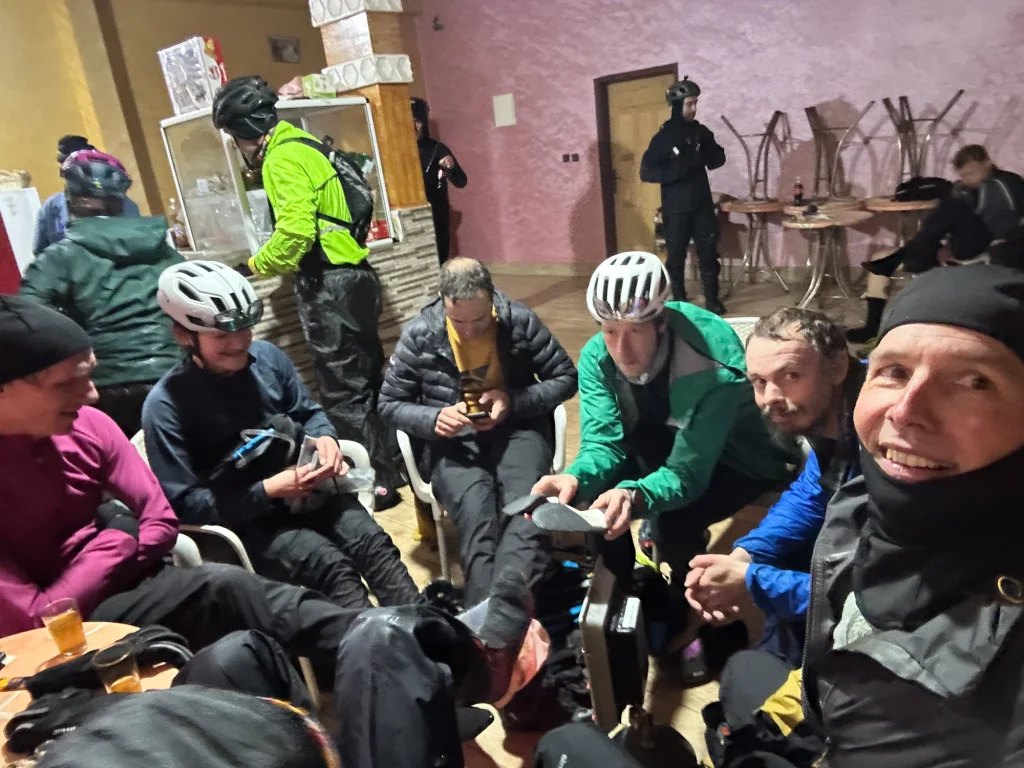
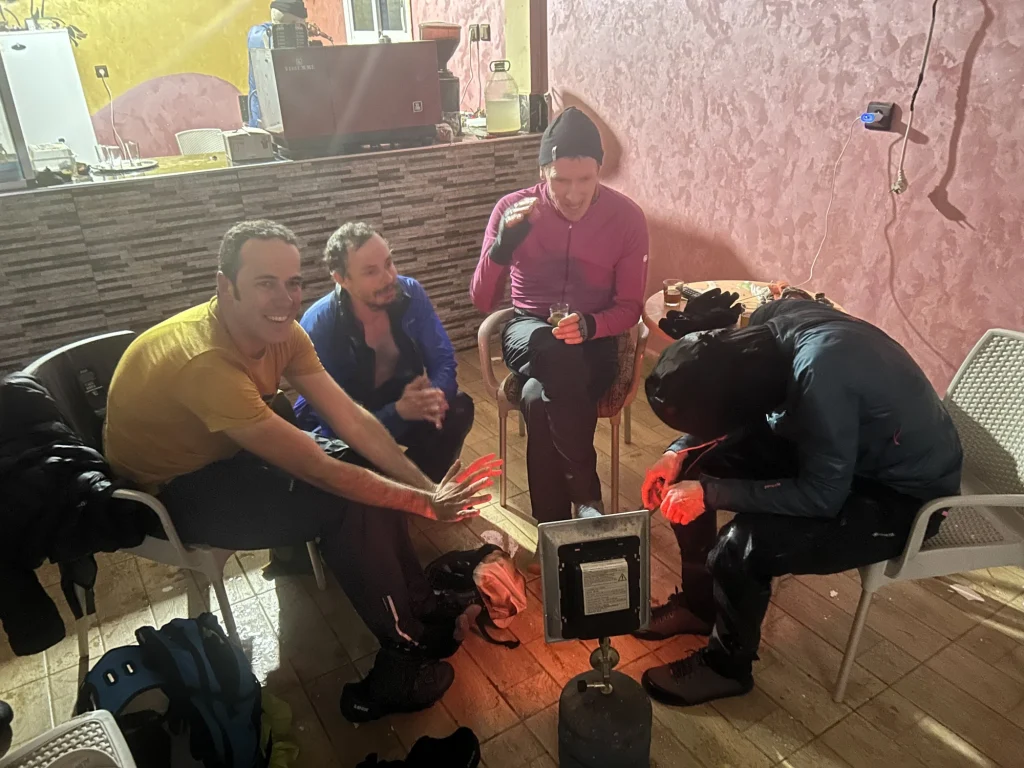
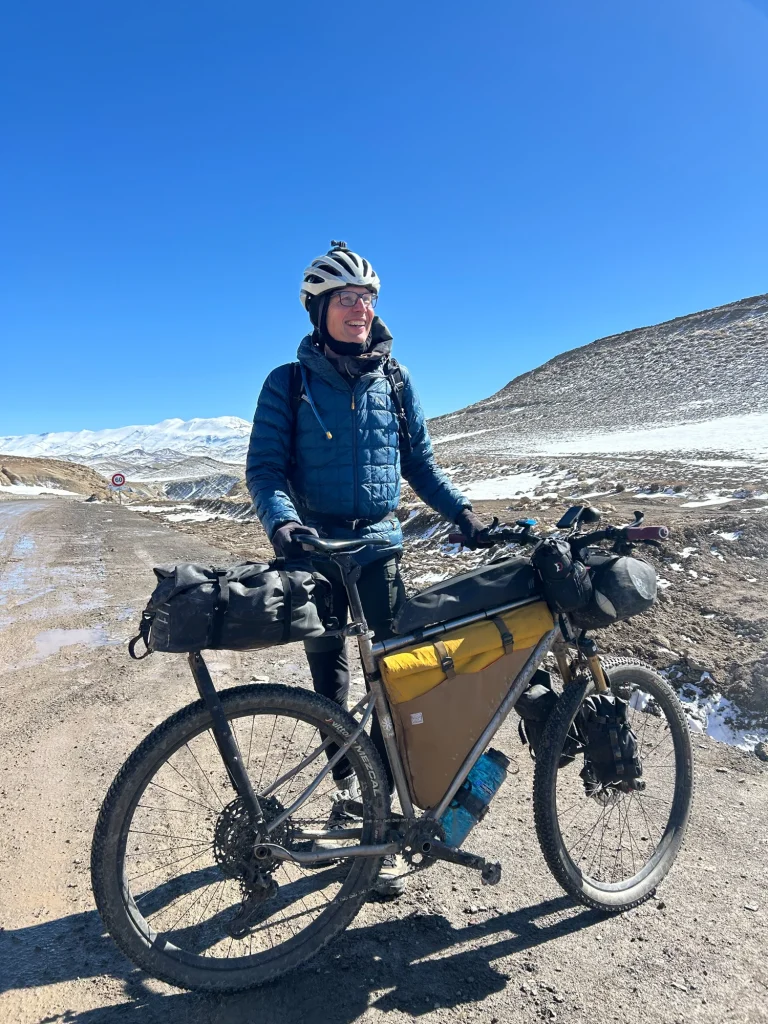
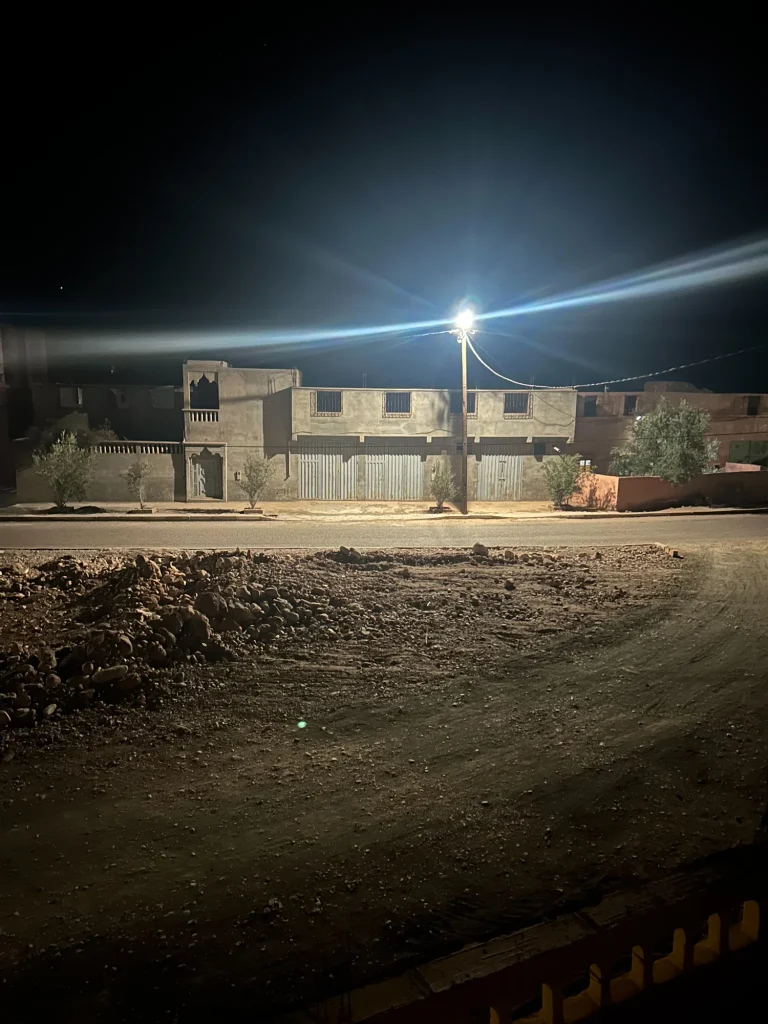
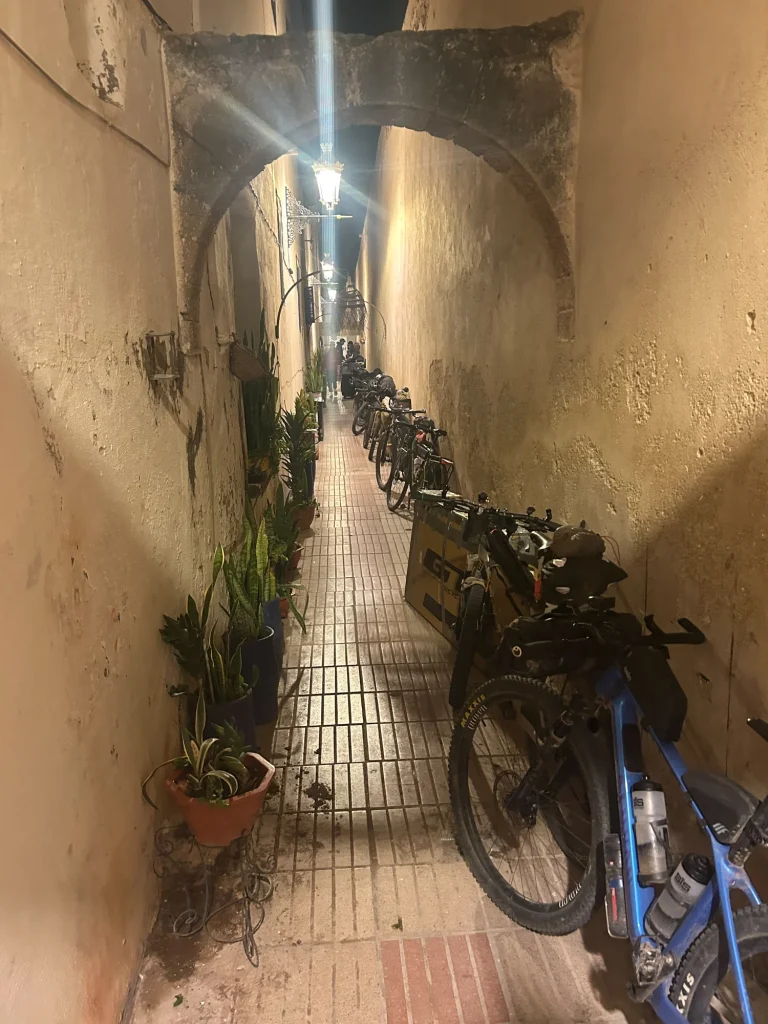
It’s just before three in the morning. I’m sitting in a bar somewhere in the High Atlas that, for reasons beyond me, is still open. Outside it’s freezing cold, everything is wet, and around me sit twenty cyclists from all over the world, all thinking the same thing: Please, not back out there.
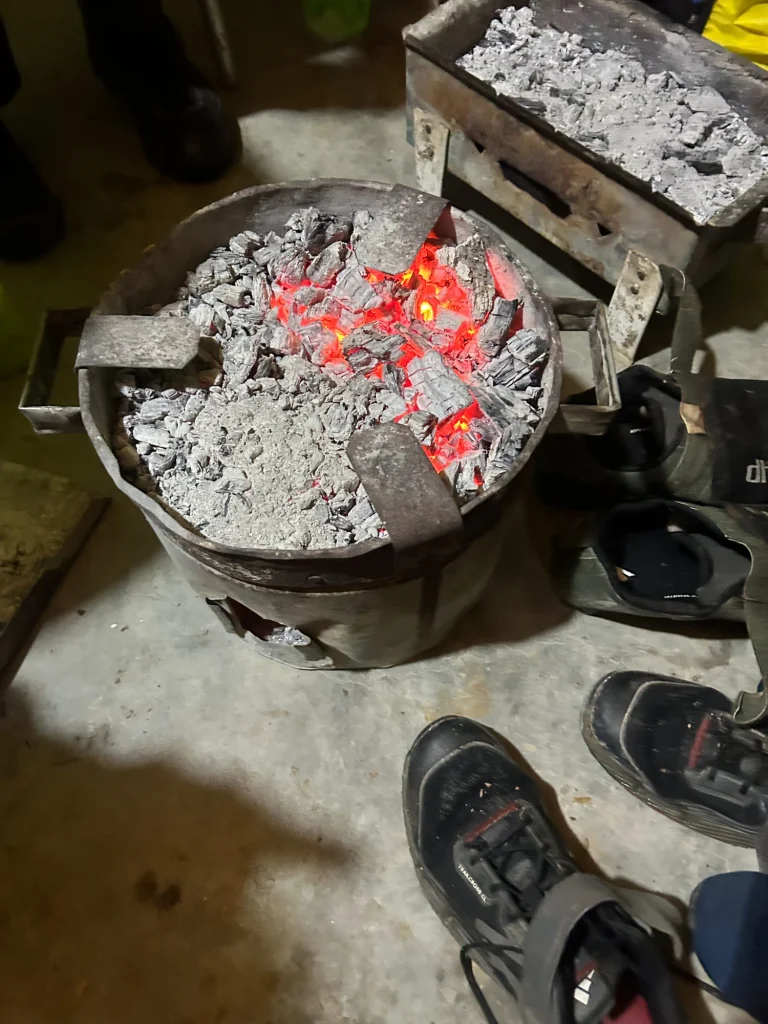
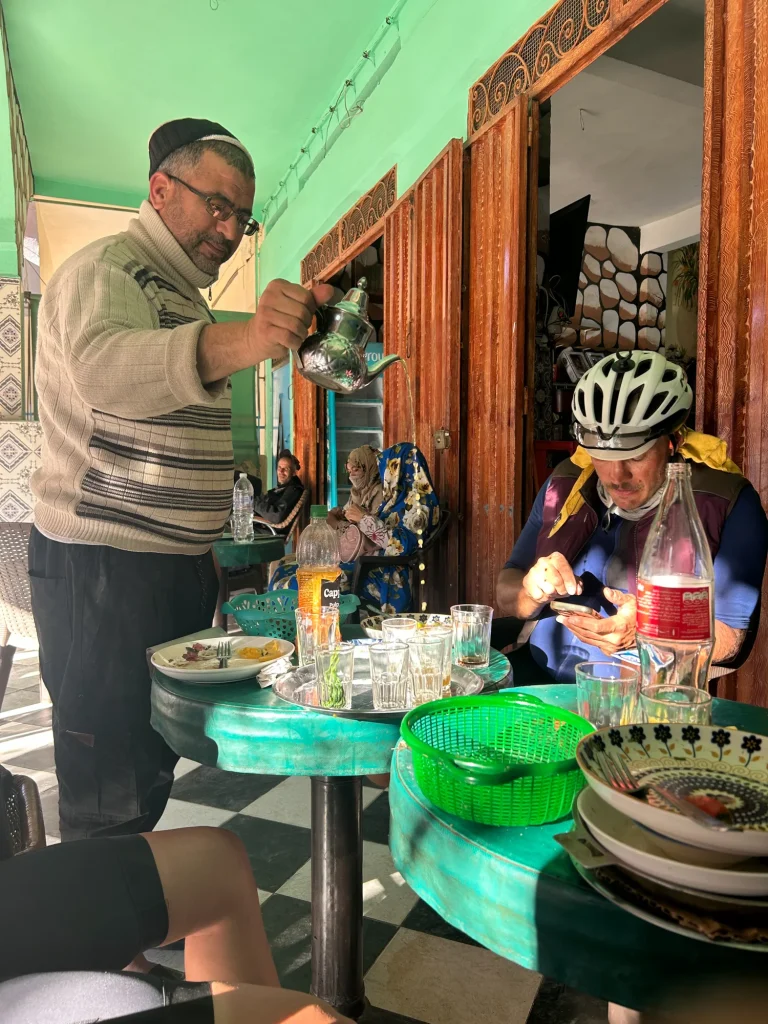
A few young men are making us tea and have lit a fire. Red embers, Moroccan tea, and the feeling that the world outside is a rather inhospitable place right now. You mustn’t get too comfortable, or you’ll never leave.
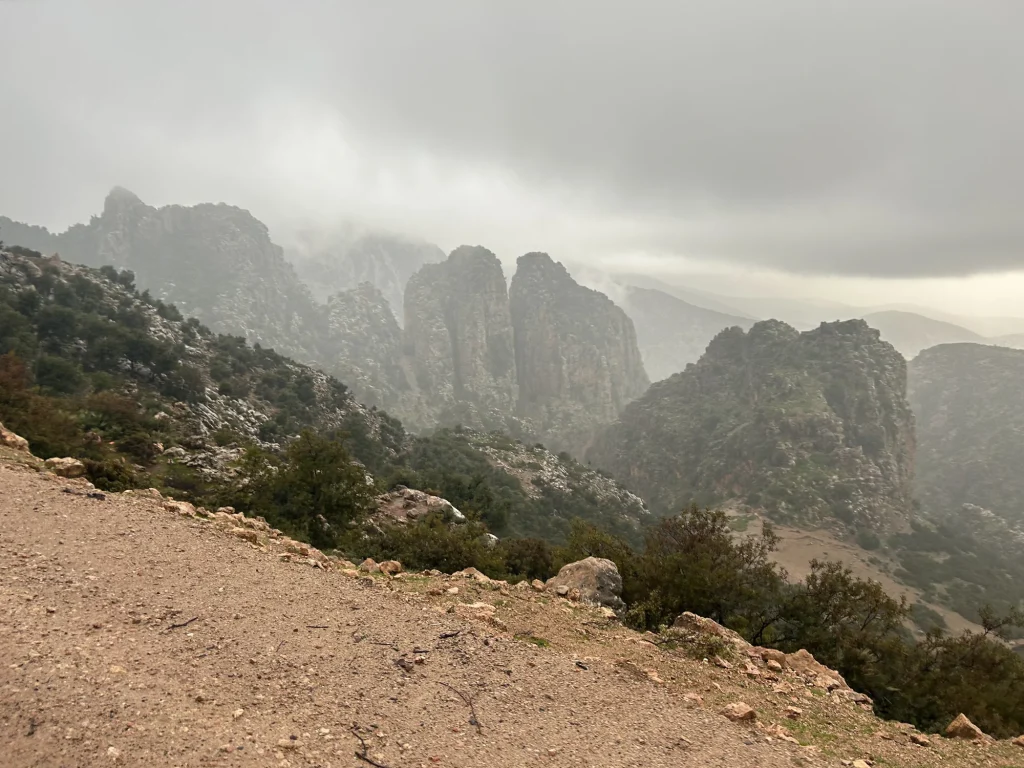
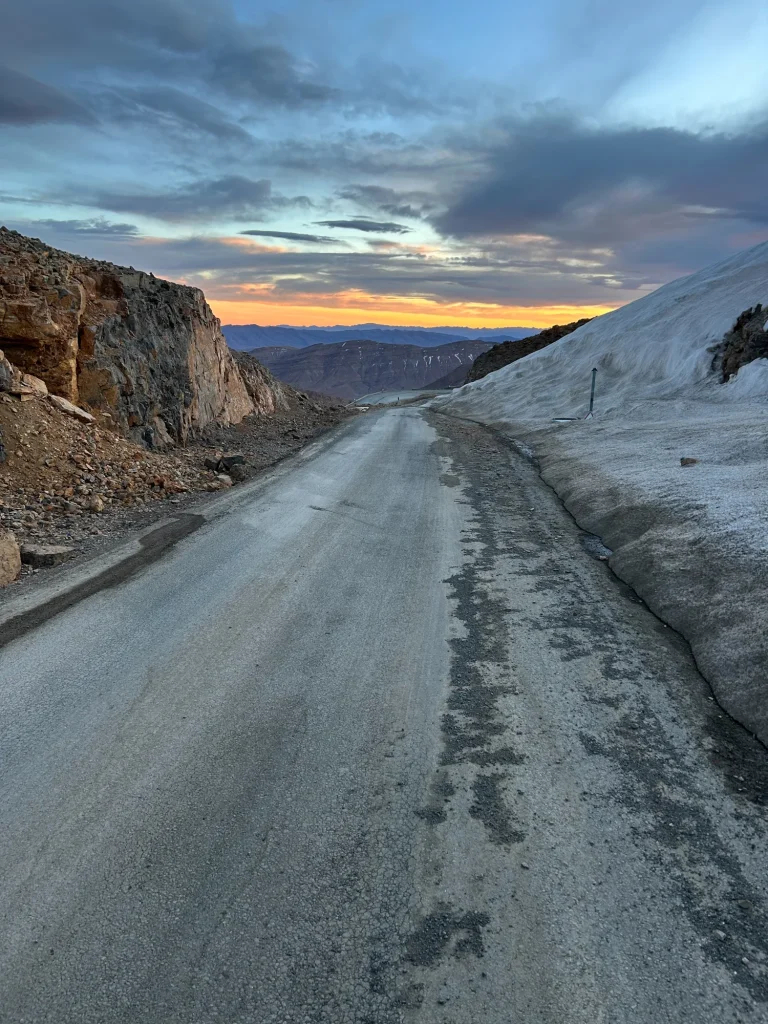
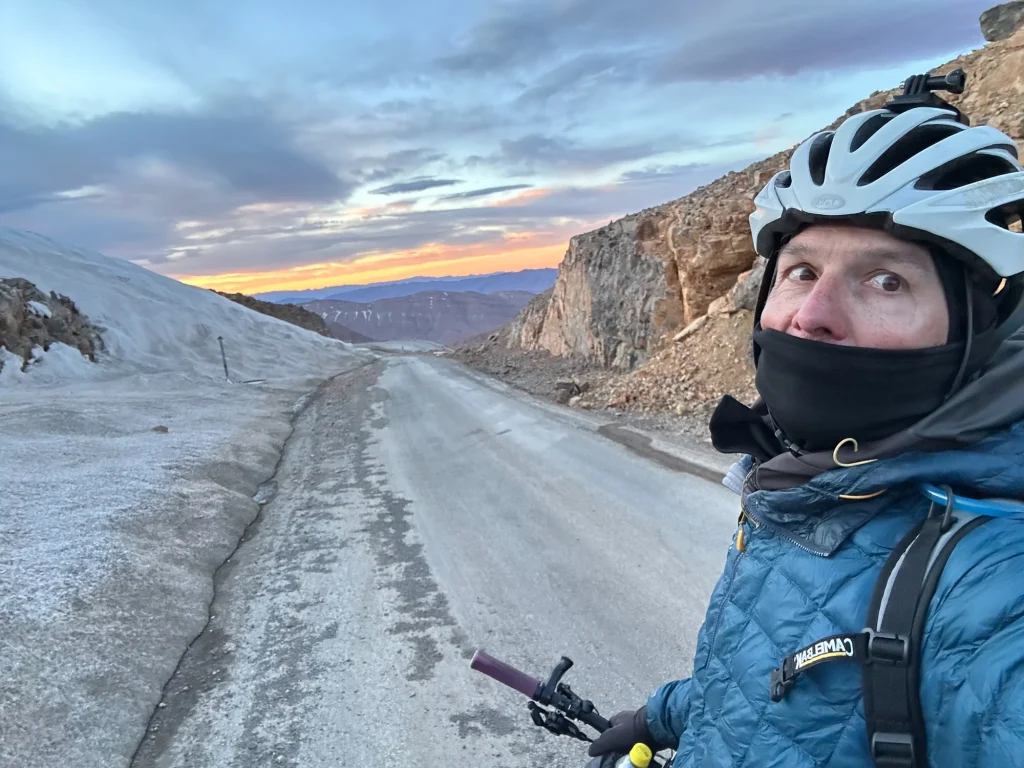
It’s the first night of the Atlas Mountain Race 2026, and it’s brutal. Rain since the start, fog, temperatures below zero. On the first pass, the descent was worse than the climb. Potholes in the fog that you only saw at the last moment, and a cold that no layer could fight. And this is just the beginning.
What is the Atlas Mountain Race?
The Atlas Mountain Race is a self-supported bikepacking race across Morocco. Roughly 1,400 kilometres, around 25,000 metres of elevation gain, from Beni-Mellal at the foot of the High Atlas over unpaved tracks from the colonial era, through the gorges of the Anti-Atlas, past hidden palm oases to the historic coastal city of Essaouira.
No teams, no support vehicles, no outside assistance. Just you, your bike, and the route on your GPS. Three checkpoints, each with a cutoff. If you don’t make it in time, you’re out.
The route is the masterpiece of founder Nelson Trees, born from his experience with the Transcontinental Race and the legacy of TCR founder Mike Hall. 2026 was the sixth edition — and the toughest. Morocco had just declared the end of a seven-year drought, with precipitation 95 percent above the previous year.
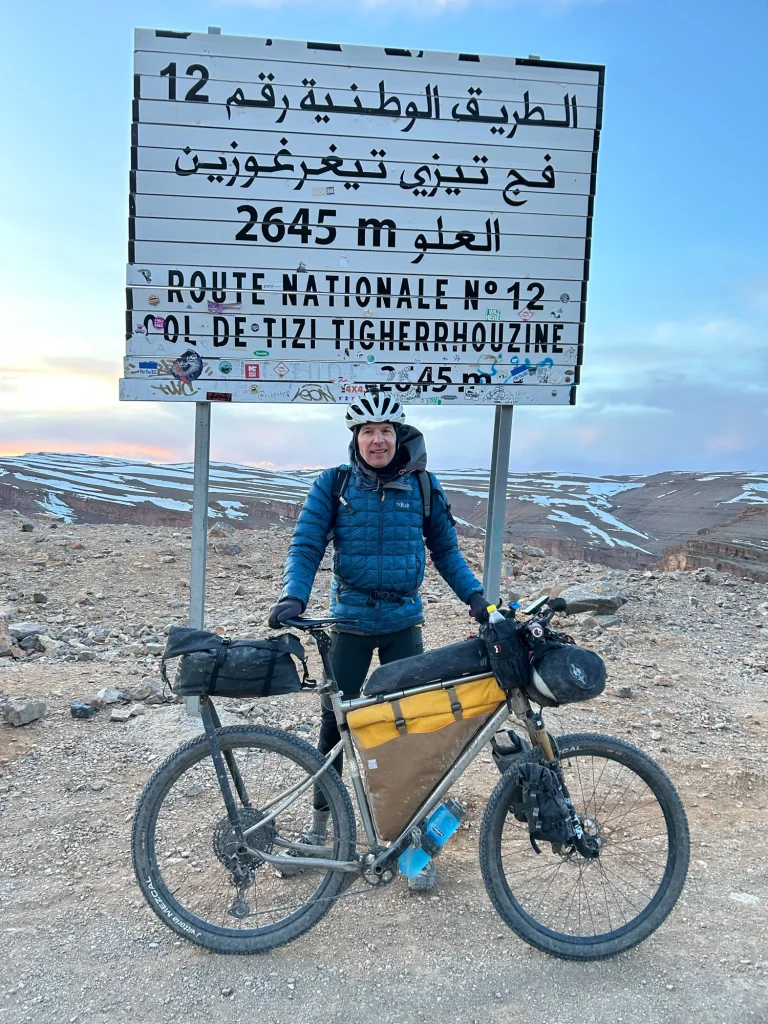
That meant: snow on the Tizi N’Ait Imi, the highest point of the regular route at 2,910 metres, which was completely closed this year as a result. Flooded riverbeds in the M’Goun Gorge, closed roads. The route had to be rerouted multiple times. The famous Gorges de M’Goun, normally a highlight with knee-deep river crossings, were a raging torrent this year. The first 300 kilometres of the route were entirely new.
Slow travel
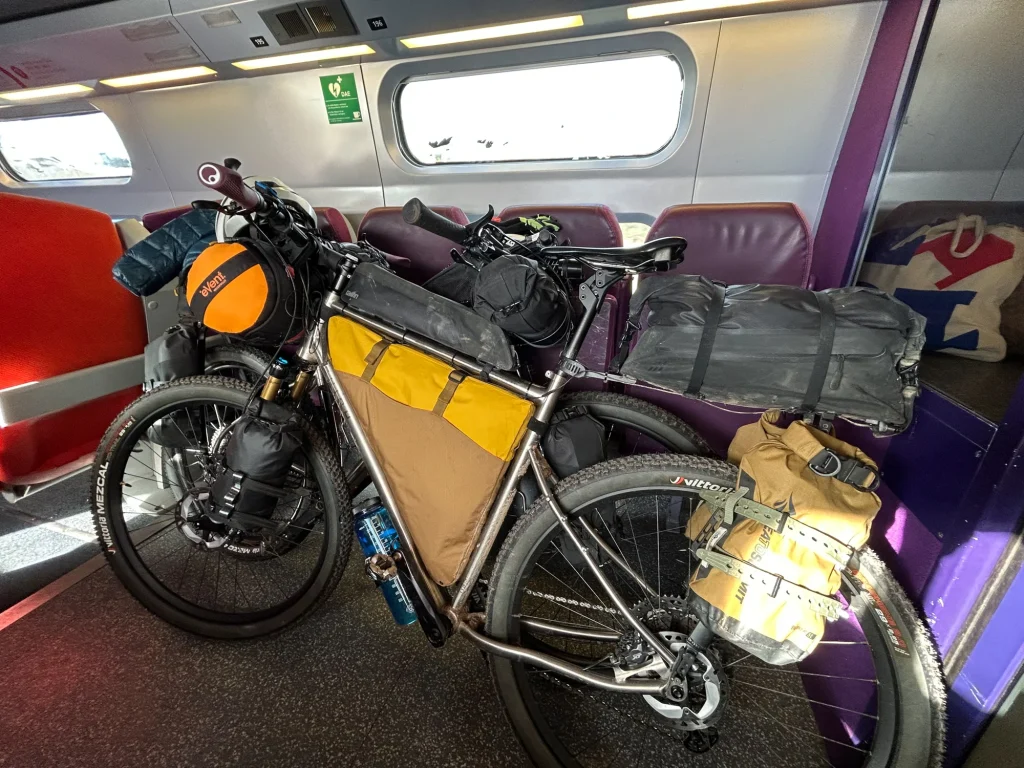
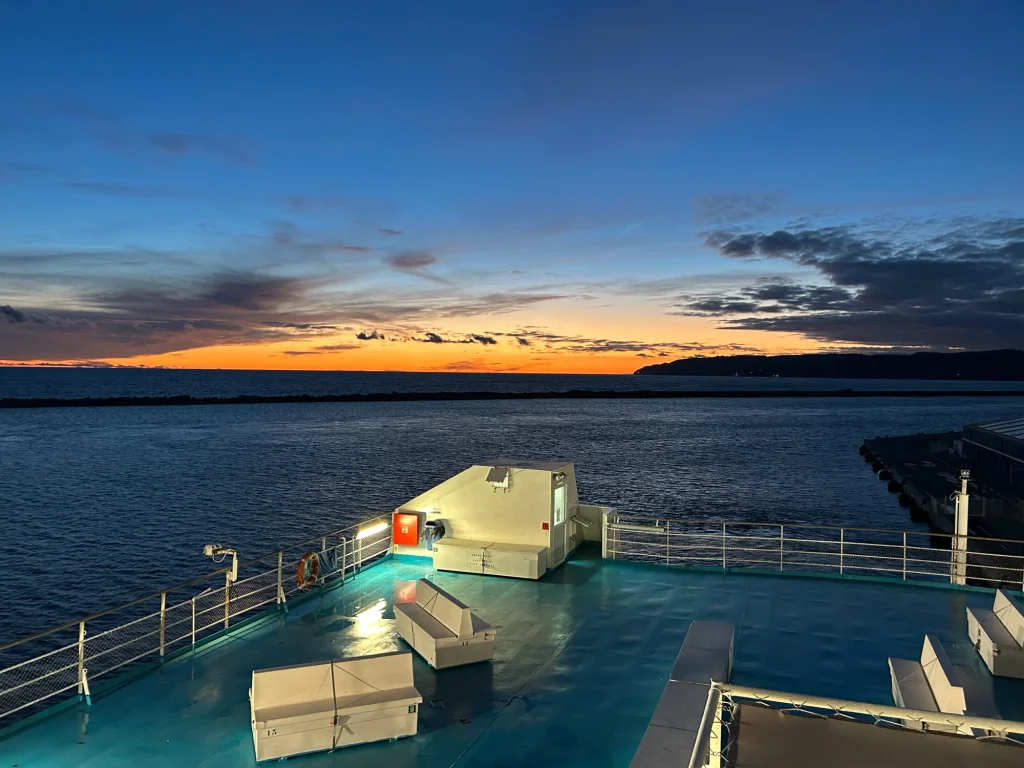
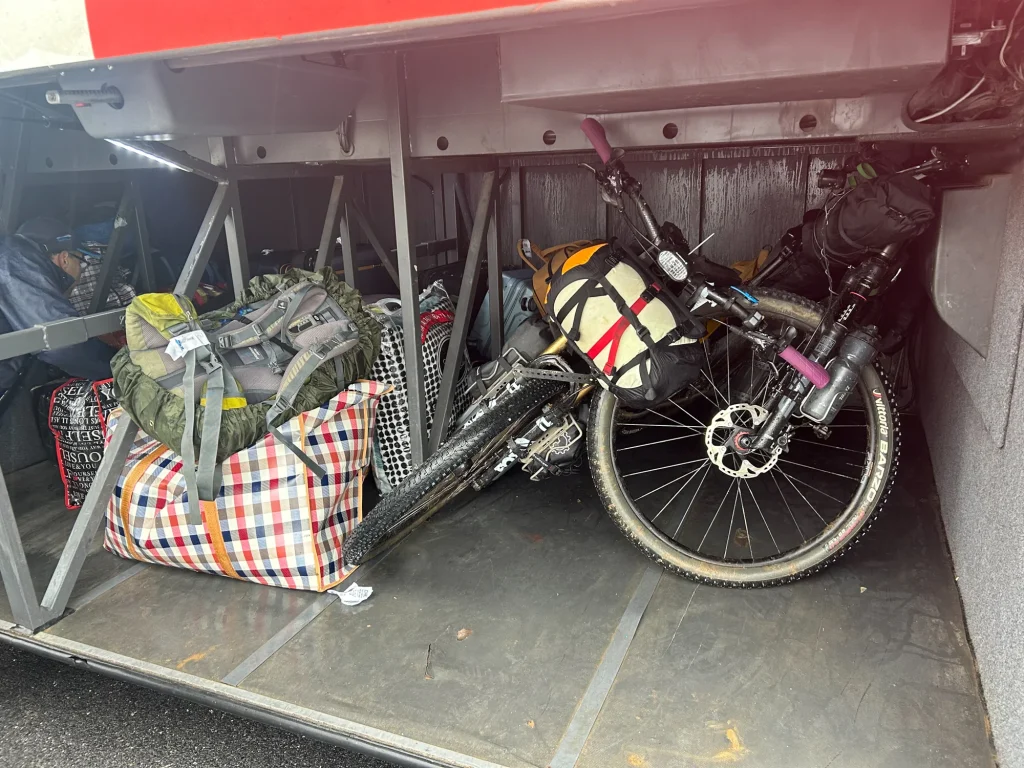
I travelled without flying, by train, ferry, bus, and bike, together with my friend Arnaud. From southern Germany via Mulhouse by train to Marseille, ferry to Tangier, then bus and bike through Morocco.
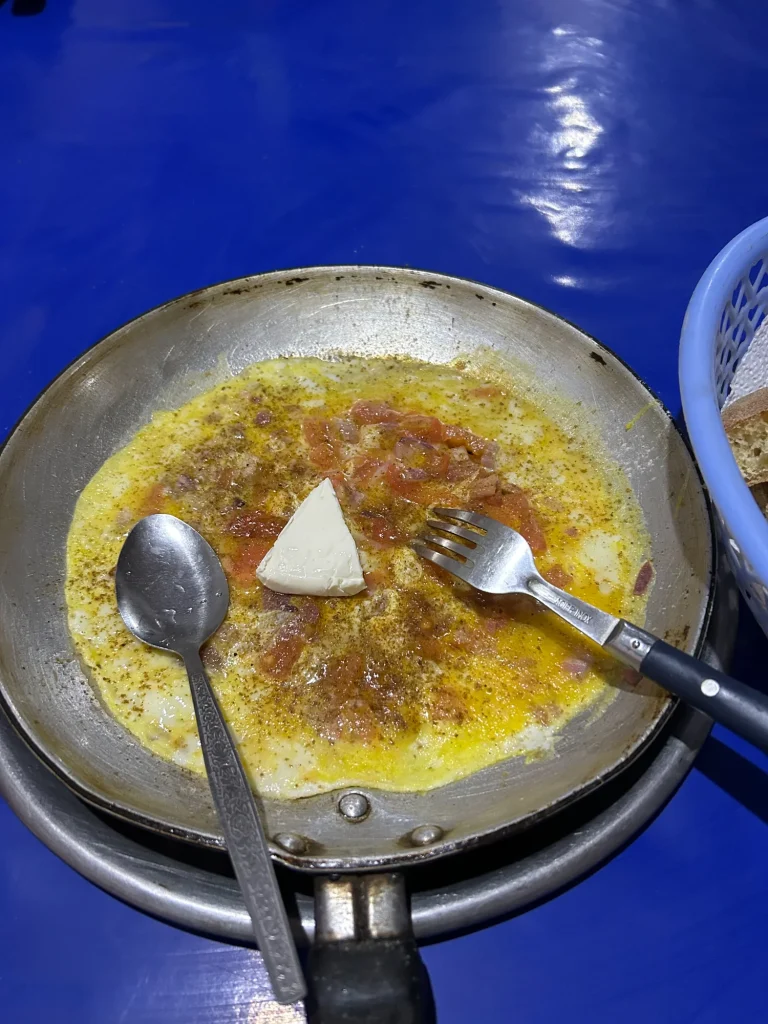
The days in Fes and Chefchaouen alone were already an adventure — the incredible medina, the first omelette, the first encounters with Moroccan hospitality.
We took our time before it all began. In hindsight, I’m glad we did: the slow journey attuned me to Morocco, to the pace, the food, the language, the people. But what came next was on a different level entirely.
The First Night After the Start — What Holds, What Doesn’t
Start in Beni Mellal, 5 p.m., in the rain. I started with stomach problems in the first hours. Due to the detours and route changes, it was around 380 kilometres to the first checkpoint — instead of the usual 270 — mostly on tarmac.
After the start, it quickly became clear: this night would be an equipment test under extreme conditions. Rain, then ice, then sub-zero temperatures. Gloves froze to the handlebars. One rider apparently had to urinate on his freehub because the grease had frozen. On the passes, ice formed on the road.
I stopped at two bars that had stayed open all night. At the second one, at four in the morning, I tried to set off again. I couldn’t bring myself to get on the bike and ride into the night. So a few more minutes of warming up, then eventually two and a half hours of sleep in my sleeping bag when it was coldest.
The next morning, I took stock.
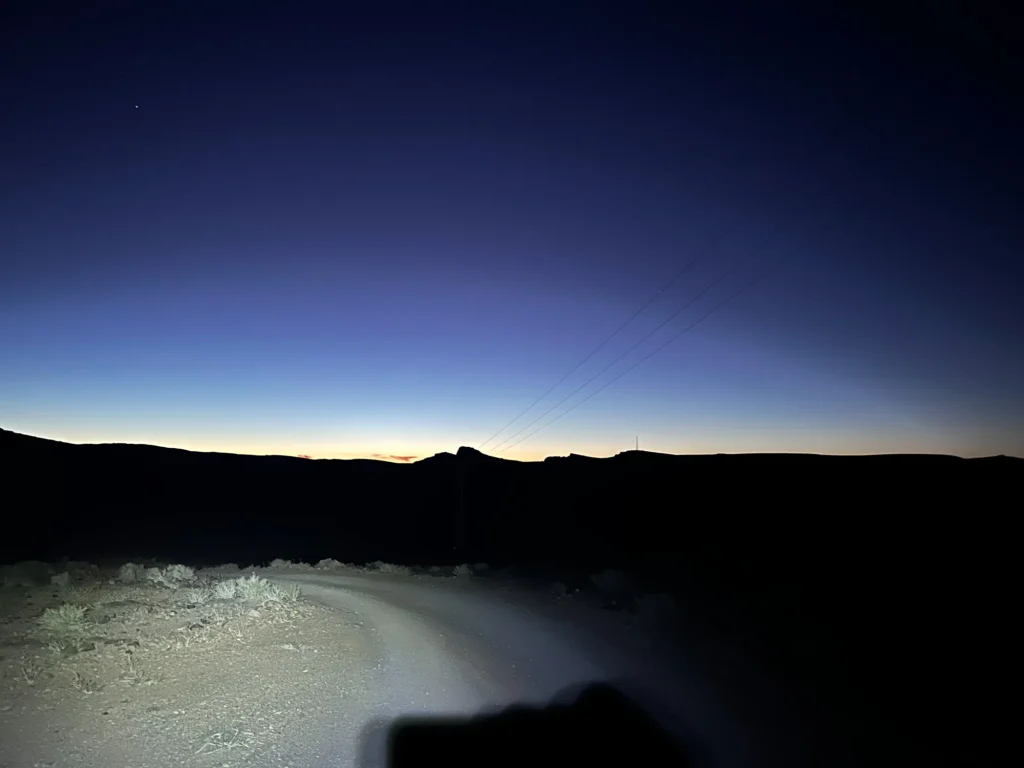
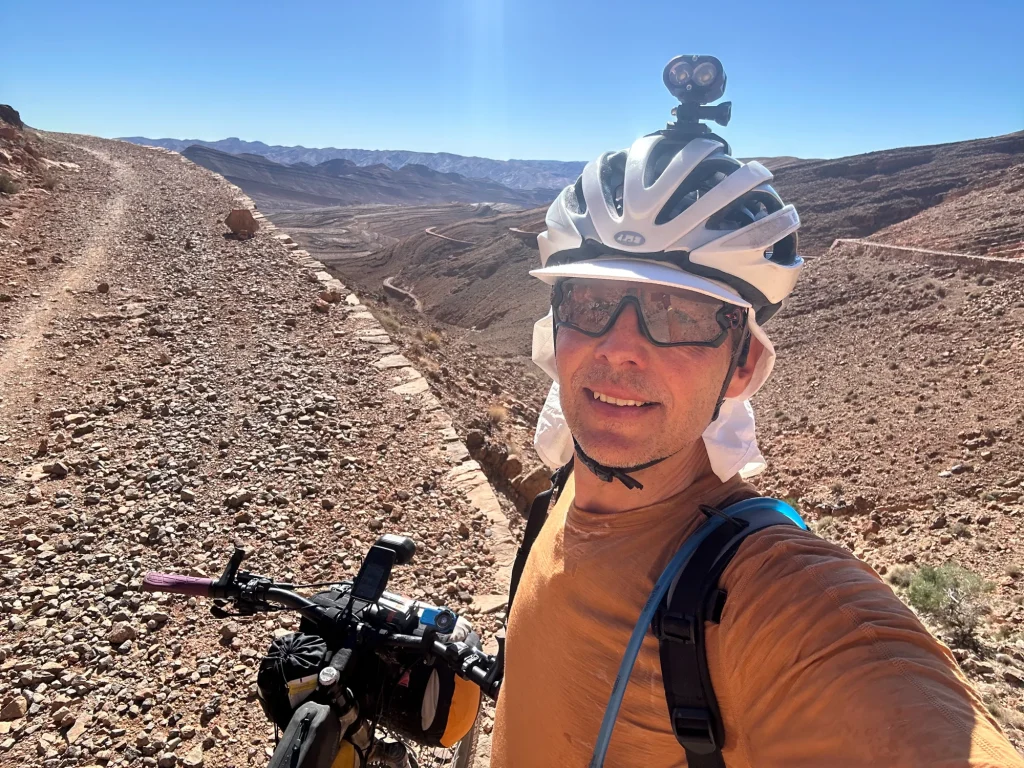
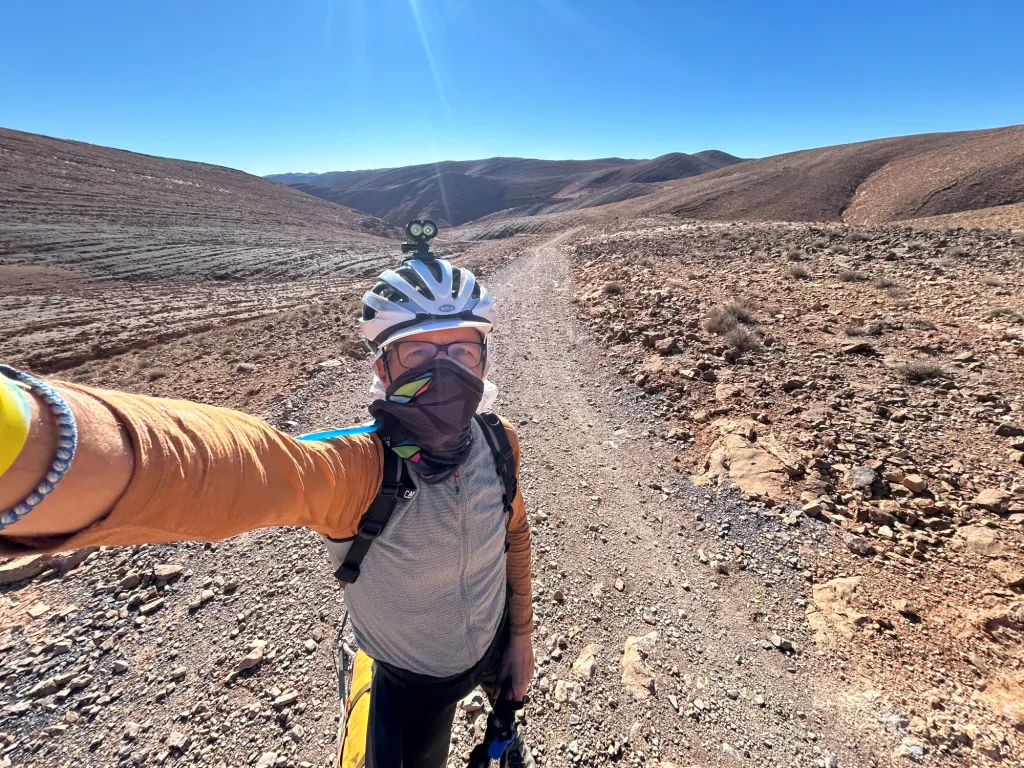
My Supernova M99 DY Pro with high beam was one of the big winners of that night. In rain, fog, and darkness, it was a real asset — a good feeling not having to worry about light. Balaclava, rain trousers, waterproof socks — all excellent.
The flops? Gloves. I had three pairs with me, all three failed. After thirty minutes in the rain, the thick gloves were completely soaked through. The overmitts so cold that you couldn’t move your fingers anymore. In the end, I rode with my last pair of merino gloves, which had fortunately stayed dry.
My navigation device also caused problems. The Coros froze up several times, and the iPhone as backup was unusable in the rain. I made a mental note: next time, two dedicated GPS units.
Storm on the Mountain
8 February, just before five in the morning. We stood at the foot of the mountain that led to the first checkpoint. And we didn’t ride up.
My race ends here. We’re not riding up there anymore. The wind is very, very strong and so dangerous. You’re practically blown off the road. There are about 10 to 15 of us who have made the same decision. I promised not to take any risks, and that’s what I’m doing.” – Voice message, 8 February, 5:47 a.m.
Hurricane-force gusts at 1,600 metres. You would have had to push for many kilometres at two kilometres per hour and still wouldn’t have made the cutoff. It was simply too dangerous.
Then the message came: Nelson set up a detour. The route was rerouted. We were back in the race. Apparently there had been warnings about the storm beforehand, but Nelson’s detour only came when riders were already stuck up there. That led to discussions afterwards — whether it should have been communicated earlier.
The relief was enormous. But the detour road was tough in its own right. Two large mountain ranges and in between a vast open plain through which the wind howled. 60 to 70 kilometres of headwind. Face, body, and bike sandblasted. Sand flying horizontally at 100 km/h. Sometimes I was doing 16, 17 kilometres per hour. Then nine. Then five. There was simply no moving forward.
Through the Stone Desert
On the third day, the wind stopped. And Morocco showed its other face.
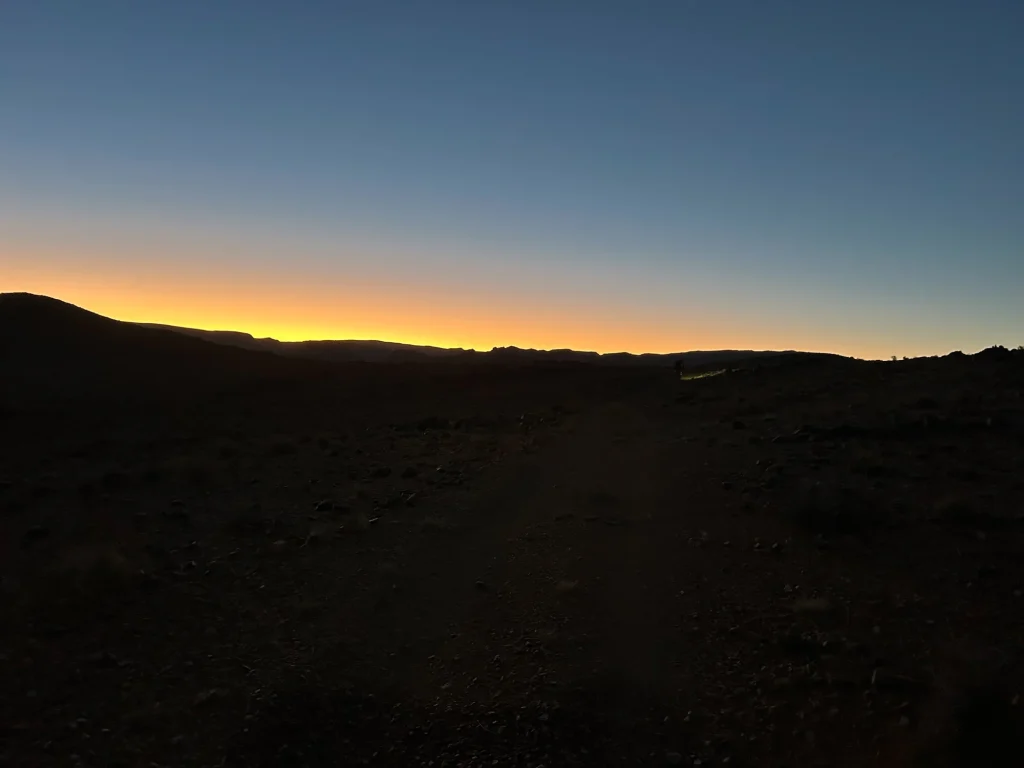
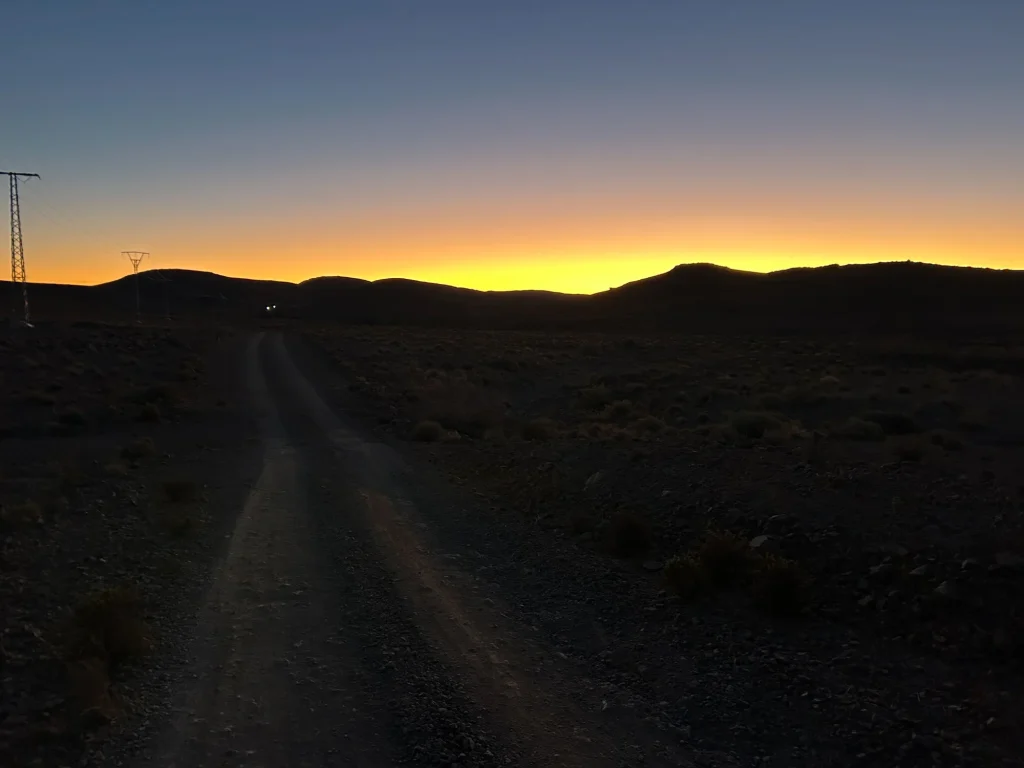
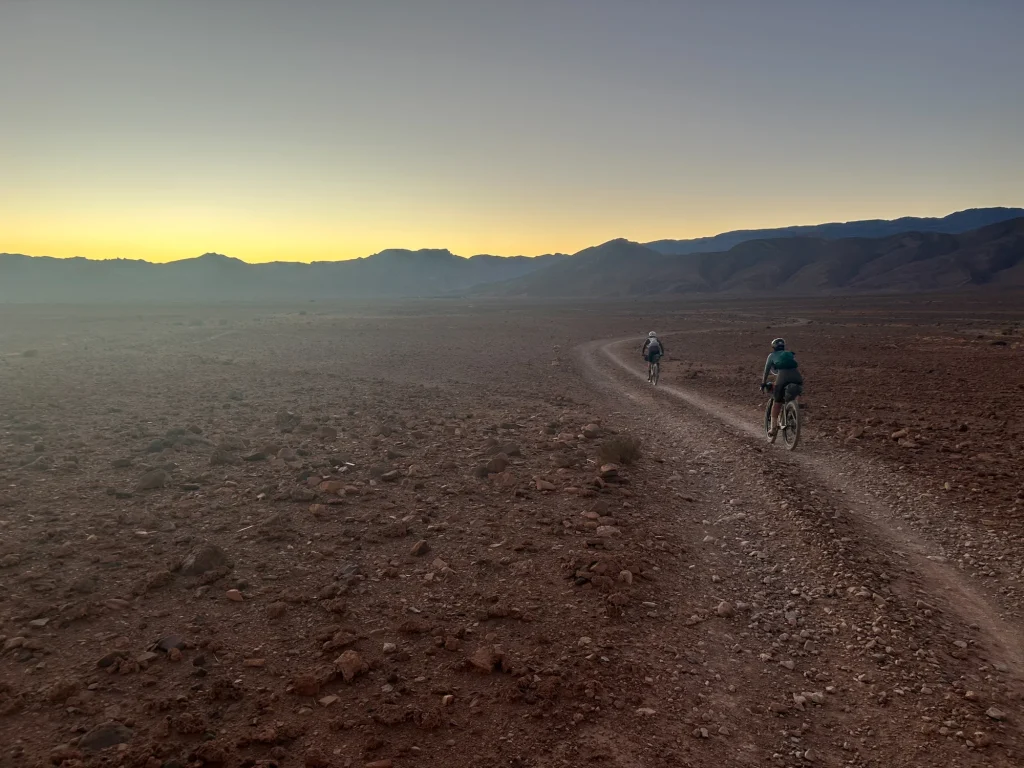
My first sunrise in Africa — I’m more of a sunset person, but this was something else entirely.
My first night sleeping in the open. Finding a spot to sleep wasn’t that easy — at the first spot, too many dogs were too close for comfort; I could hear them barking in the darkness, saw their eyes.
So a few kilometres further on, and then: absolute dead silence. Somewhere at 1,400 metres, no wind, no sound, no nothing. Above it, the legendary Moroccan starry sky. I had perhaps a minute to take it in. Then I fell asleep with my glasses still on my nose. During the night, I heard other riders passing by.
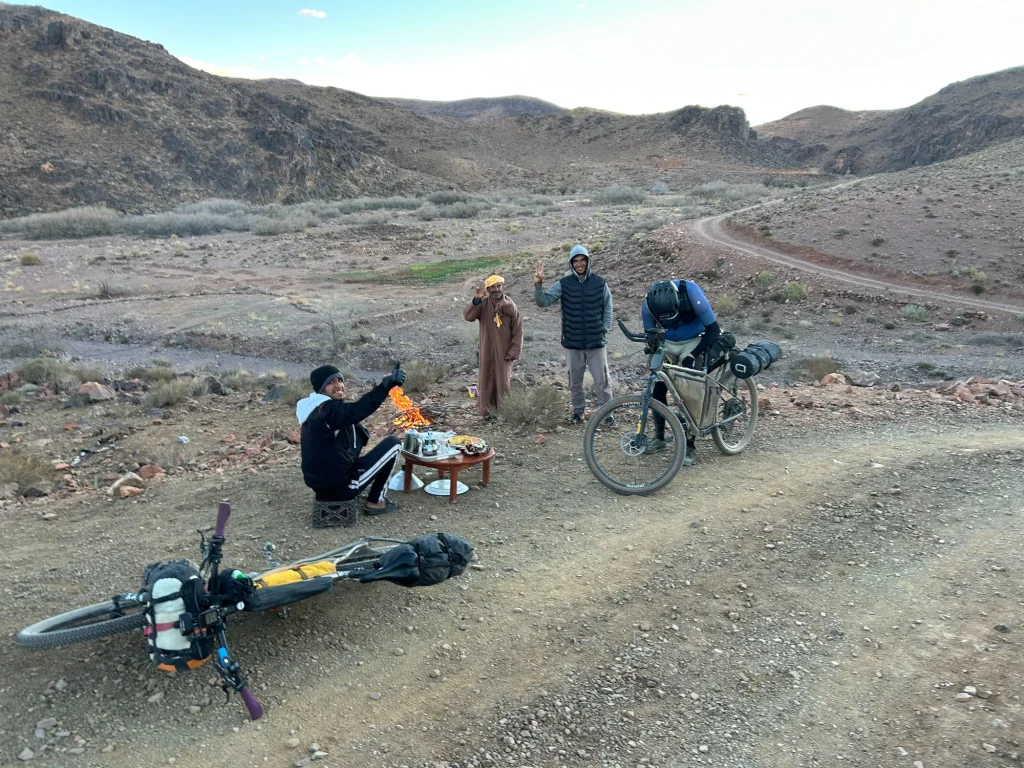
The next morning, while pushing up a 20-percent gradient, suddenly trail magic at its finest:
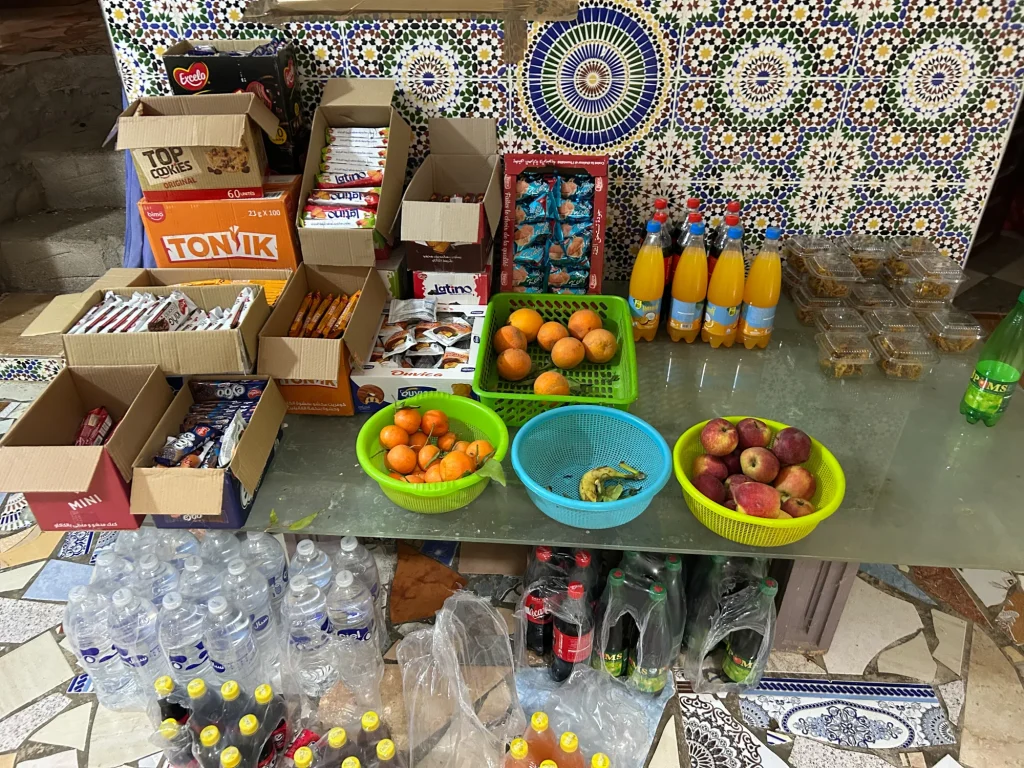
“Down there before the climb, truly in the middle of nowhere, there are just three guys offering you tea and pastries. And one of them has just lit a little fire. No idea if they live there, but they’re sitting there waiting for us. Trail magic doesn’t get any better than this.” – Voice message, 9 February, 8:35 a.m.
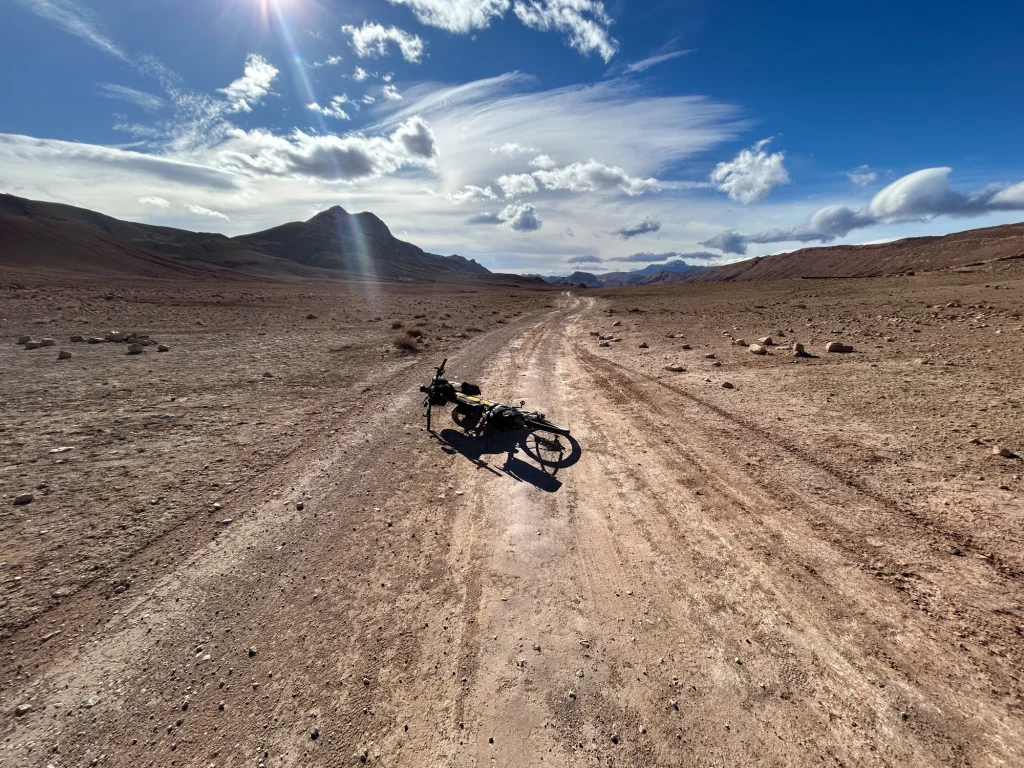
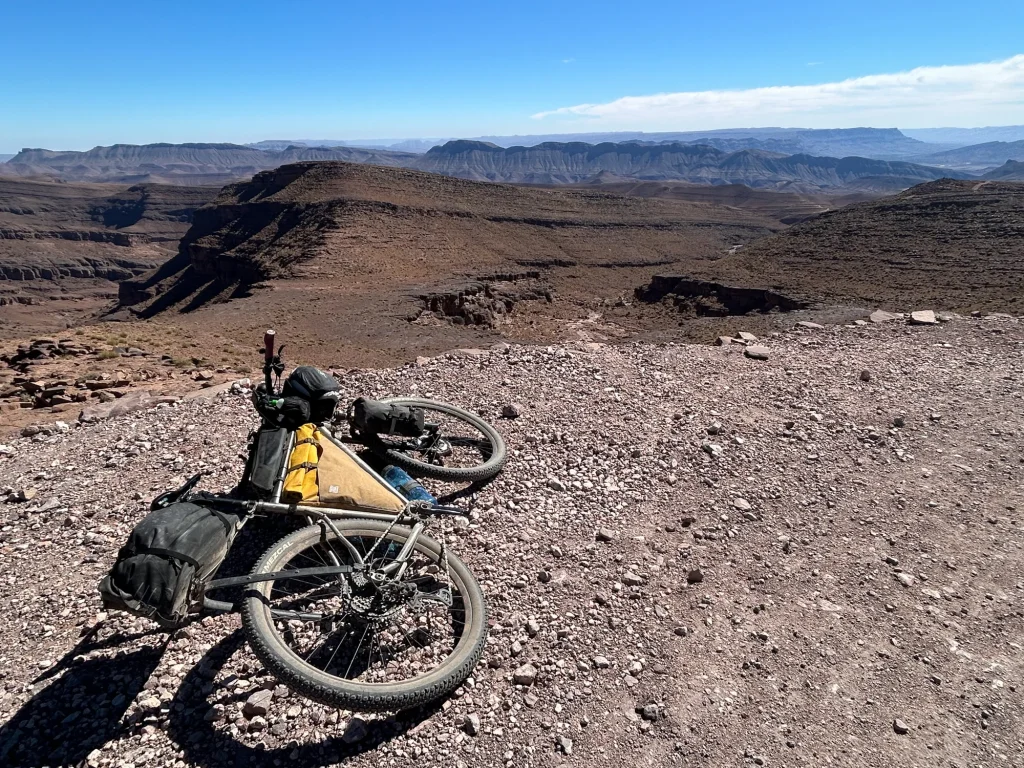
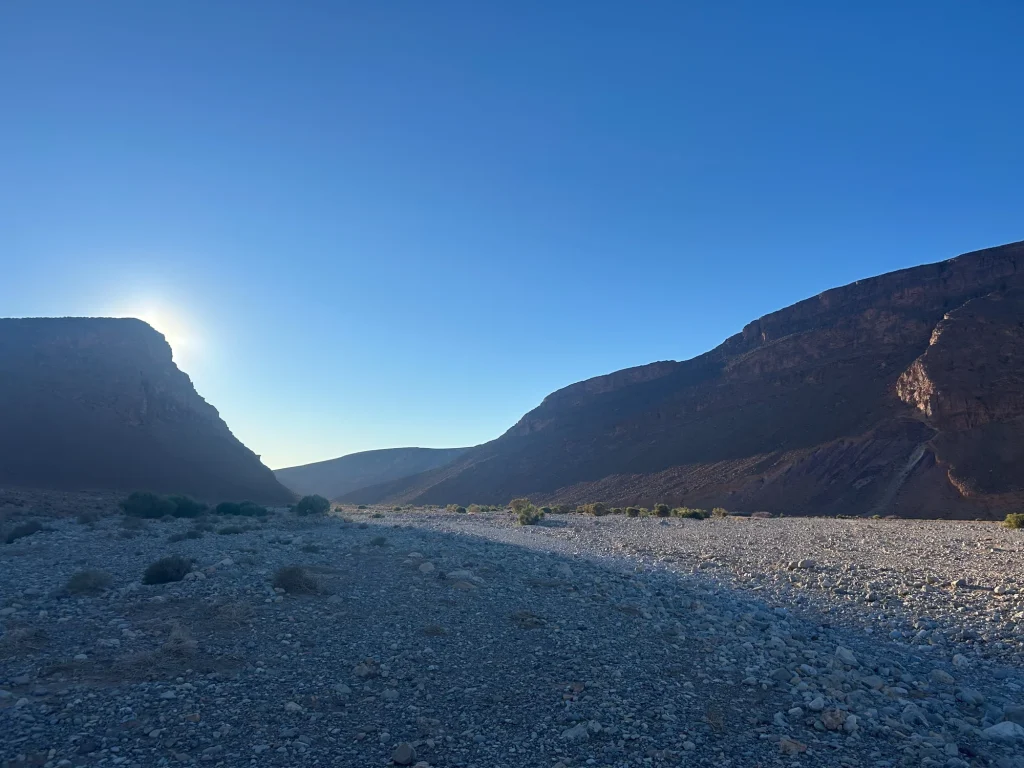
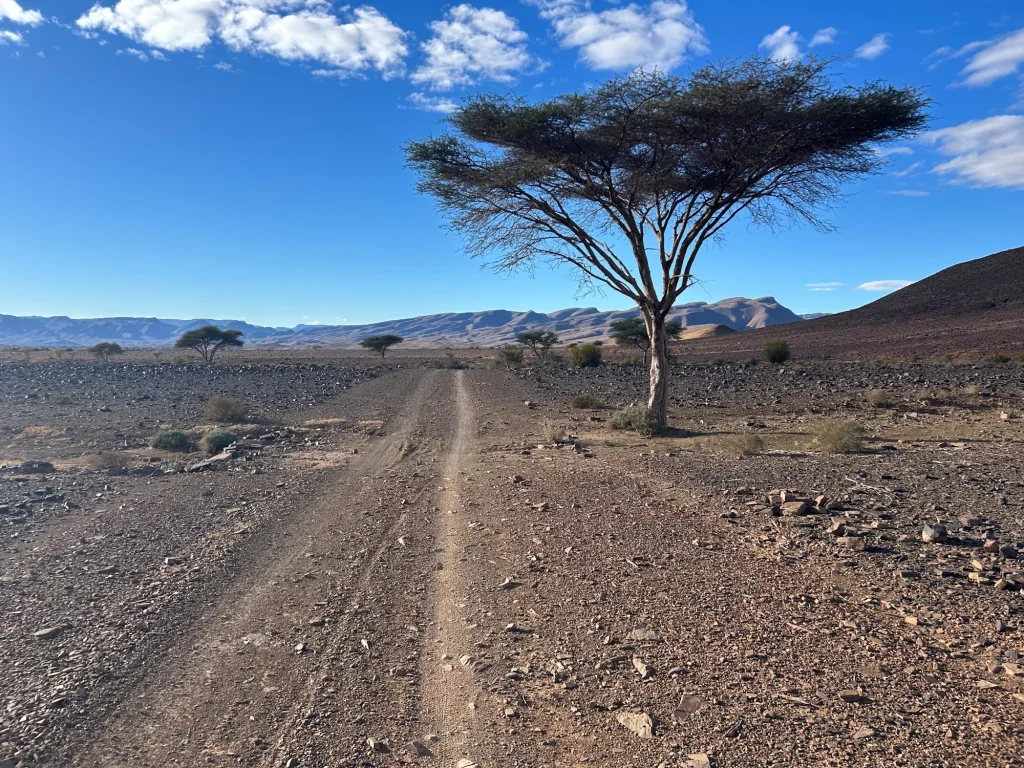
Then the notorious 100-kilometre stretch from Kalaat M’Gouna to Afra. An old track built on a network of canyons. No resupply, scorching heat, after three days of rain and cold suddenly the other extreme.
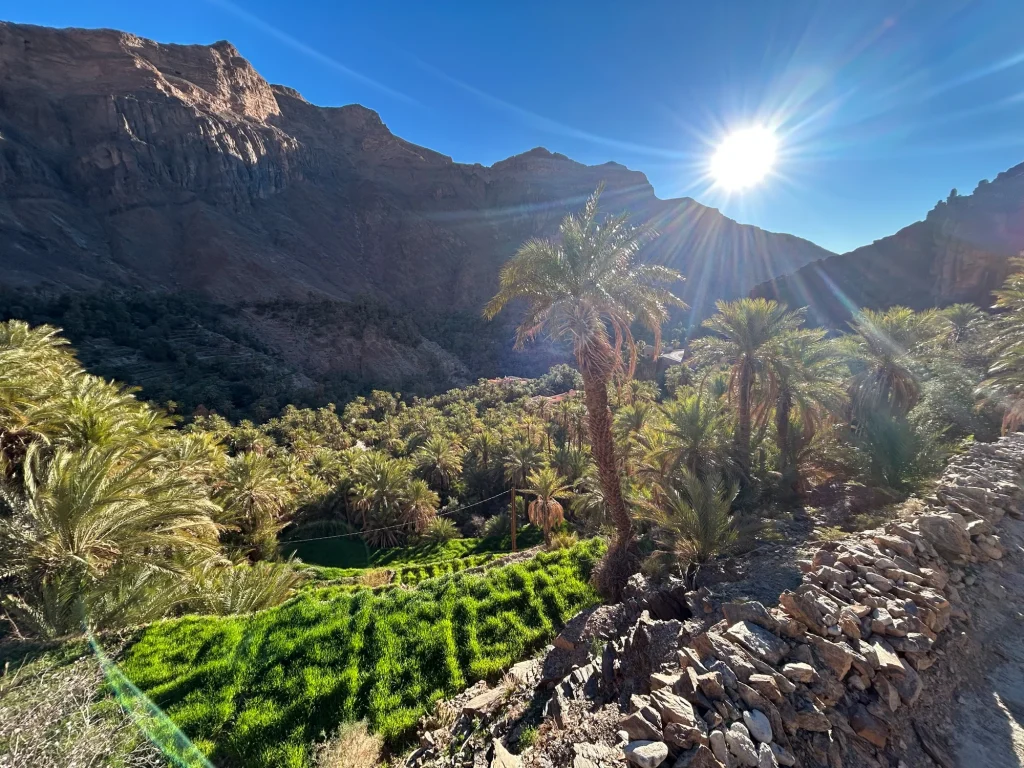
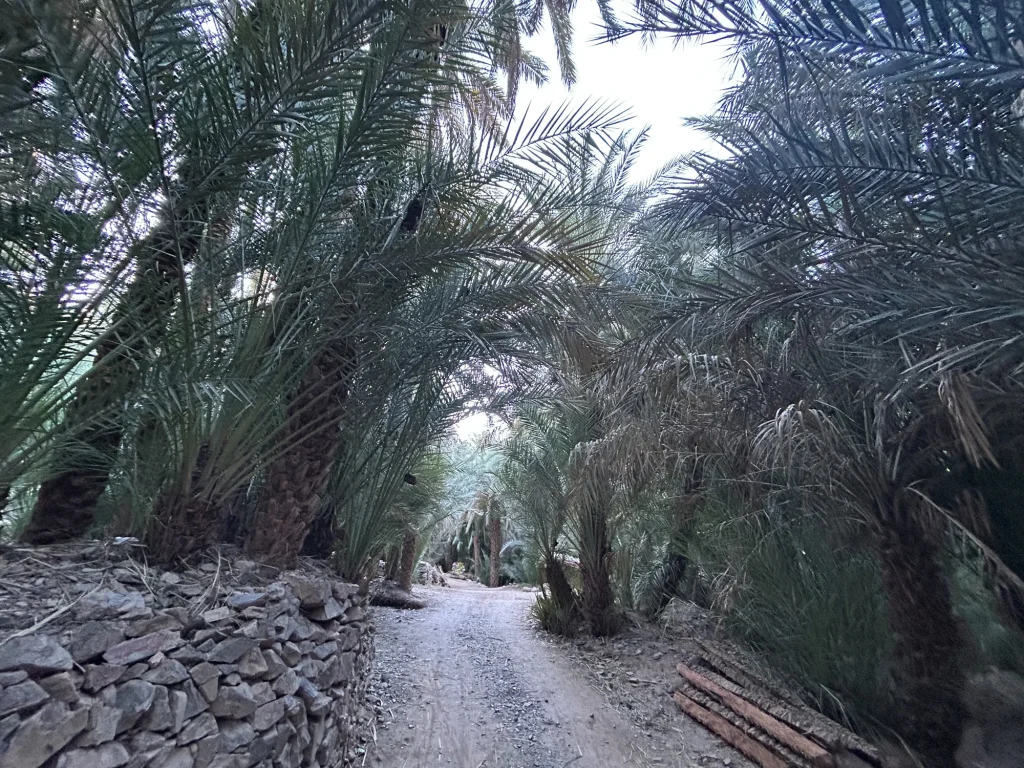
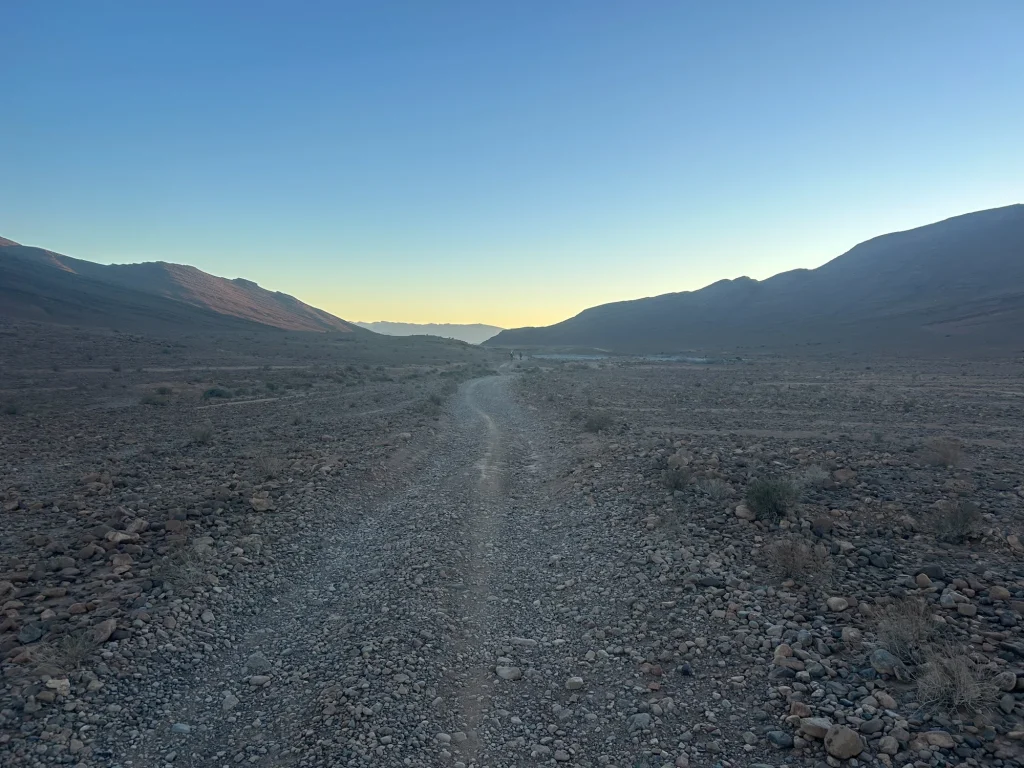
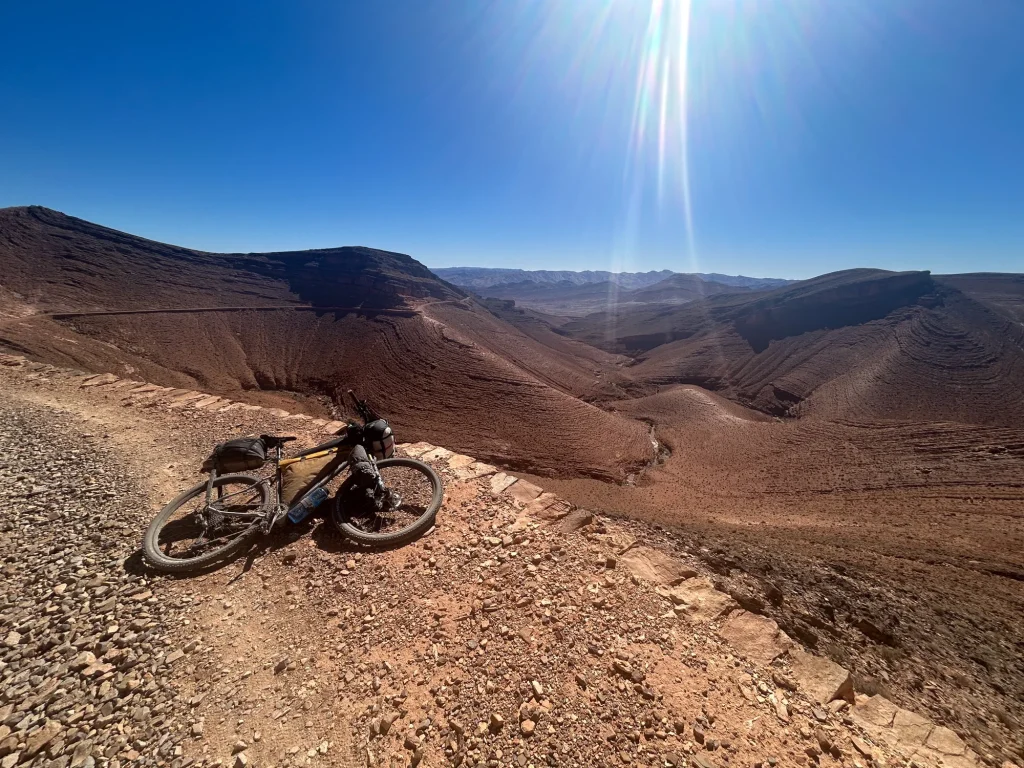
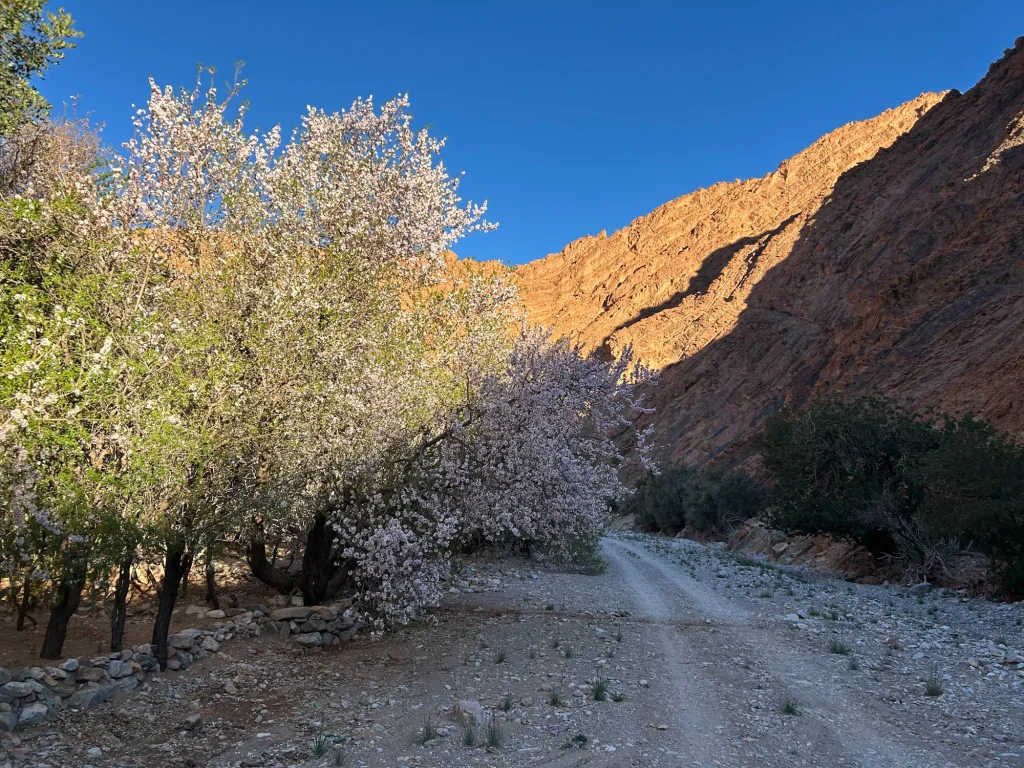
From the snow-capped peaks of the High Atlas, it descended into the barren stone desert of the Anti-Atlas, where reddish-brown rock spires rise from the ground and the mountains glow in shades of pink, red, and orange depending on the time of day. In between, again and again, fertile oasis valleys with date palms and Berber villages — green islands in an austere, almost lunar landscape.
For me, one of the most beautiful sections of the entire race.
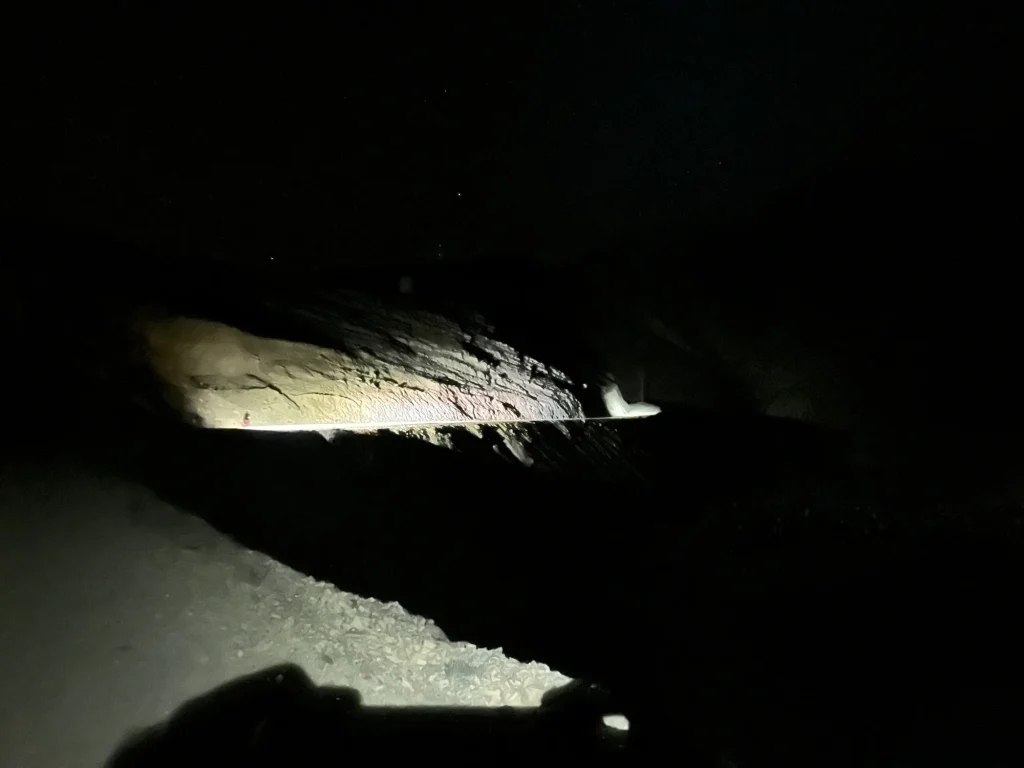
After that, a tough road climb at night, with lorries, rock walls on both sides, and the wind whistling through the gorge. Some riders pushed the entire ascent, for two hours straight.
The People
What stays with you from the Atlas Mountain Race are the sunrises and sunsets over the Atlas, the silent nights in the desert, the landscape. And the people.
“Today a little boy stood by the roadside, maybe two or three years old, not a hint of expression, motionless, one hand raised in a victory sign. And when I waved, he waved back, but he didn’t smile.” – Voice message, 9 February, 7:19 p.m.
In Afra, a three-year-old stole a piece of omelette off my plate. The father intervened, everyone laughed, the boy cried. I just thought: Maybe he’s hungry.
The Moroccans knew about the race. They could rattle off the Bundesliga — Bayern Munich, Dortmund, Leverkusen. In one bar, the bartender pulled out his phone with the tracker running, zoomed in, and showed me my own dot. “Christian?” That made him happy.
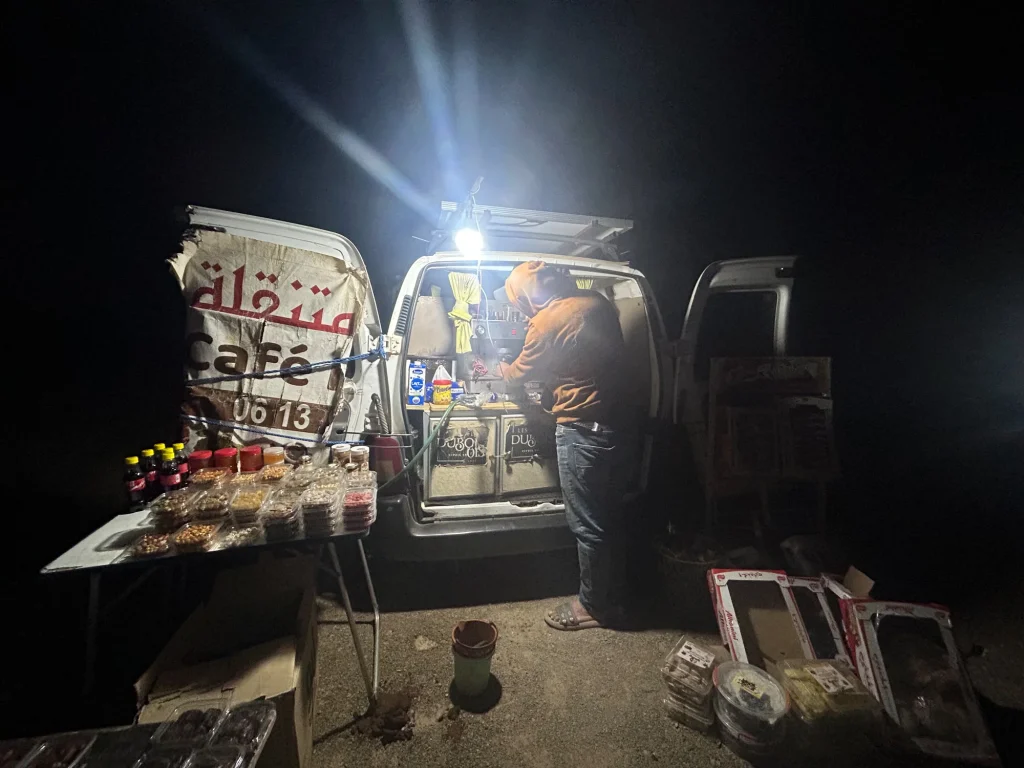
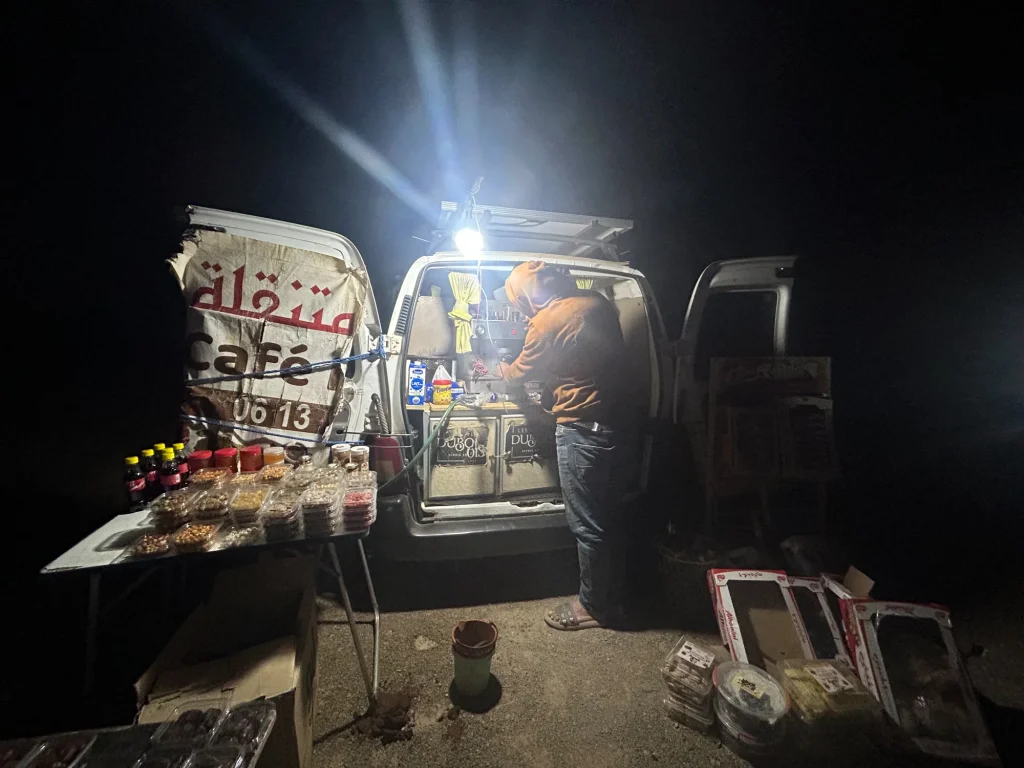
In the middle of the night, espresso carts stood along the route, run by locals offering biscuits, dates, and cola. The police accompanied us through the first night, a car at every junction.
And a rider from Poland had specifically learned the Berber dialect in online video courses before the race — just for the AMR. In Afra, he was given an omelette for free, and an old man went off, fetched him oranges, and placed them on his table. That kind of perfect preparation opens up an entirely different kind of encounter.
But there was also the other side. Afra stayed with me. Bleak, broken, the infrastructure virtually non-existent. Half-finished houses, rubbish strewn across the landscape, children asking for money. The shop owner who opened his private house for riders so they could use a toilet. These contrasts — the hospitality alongside the poverty — are what make Morocco so complex.
The turning point
At CP2, a young German dropped out because his neck muscles had turned rock-hard like concrete and he could no longer hold his head up — Shermer’s Neck. Eoghan from Ireland called it quits because of saddle sores.
There were enough reasons to stop. While I sat at the checkpoint, other riders were ordering taxis, looking spent, giving up.
For the first time, I took honest stock. My body was holding up, surprisingly well even, just minor saddle issues. But the rhythm wasn’t right. I was trying to force sleep, but it wouldn’t come. I couldn’t keep this up for another two or three days.
The maths didn’t add up: a whole day of hard riding to arrive 2 hours before the CP deadline. I realised I couldn’t set off again after just 3 hours. I was too slow for the CP3 cutoff, and less sleep wasn’t an option.
So I made the decision: sleep and continue the next morning, but in touring mode. Take in the highlights — the Old Colonial Road, the oasis, the mountains — and call it a day at CP3 in Tafraout.
The hardest race I had ever done. I was no longer within the time limit, but I kept riding.
I felt surprisingly good after six hours of sleep at CP2 and a proper breakfast with the Moroccan amlou, which was a real discovery.
And Arnaud? I hadn’t seen him since the first hour after the start. He was somewhere up ahead, fighting, just ahead of the “snail” — that dot on the tracker that moves at a constant speed and marks the race cutoff.
The Old Colonial Road
Beyond CP2, at the Auberge des Etoiles in Aserraragh, the route first descended into the Aguinane Palmerie — a green oasis nestled in a gorge of steeply rising granite walls.
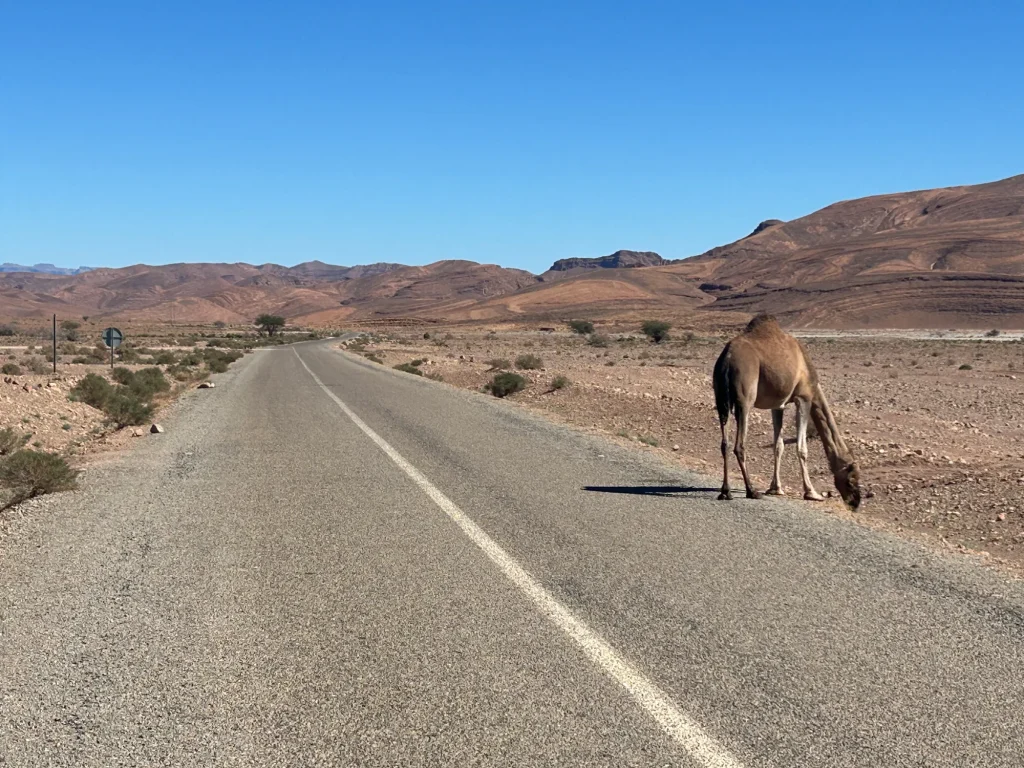
From there, for hours through a vast river valley, through a canyon with switchbacks, past dried-up wadis and scattered Berber settlements. Meerkats crossed the road, camels stood close to the track.
Then Tagmout, where the best hosts of the entire race were waiting for us.
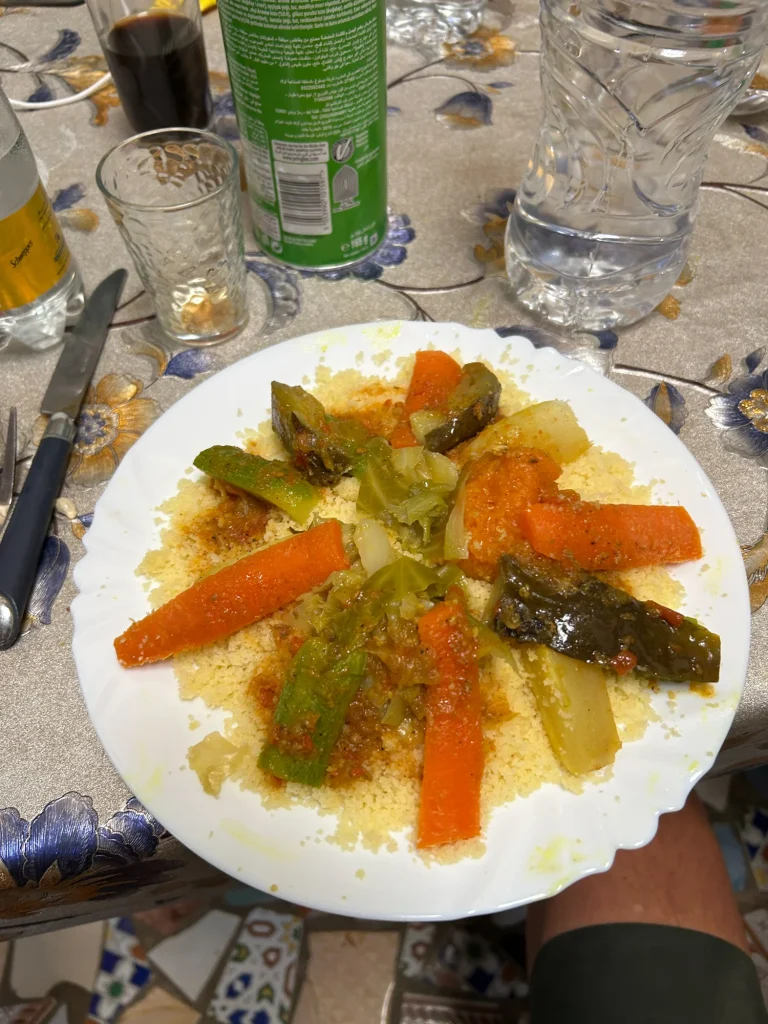
I was now riding with Jose and Cristina from Spain, whom I knew from previous events and had run into again on the route. That night we slept at an elderly guesthouse couple’s place who cooked us a fantastic tagine, gave us oranges and water, and constantly asked if we were alright.
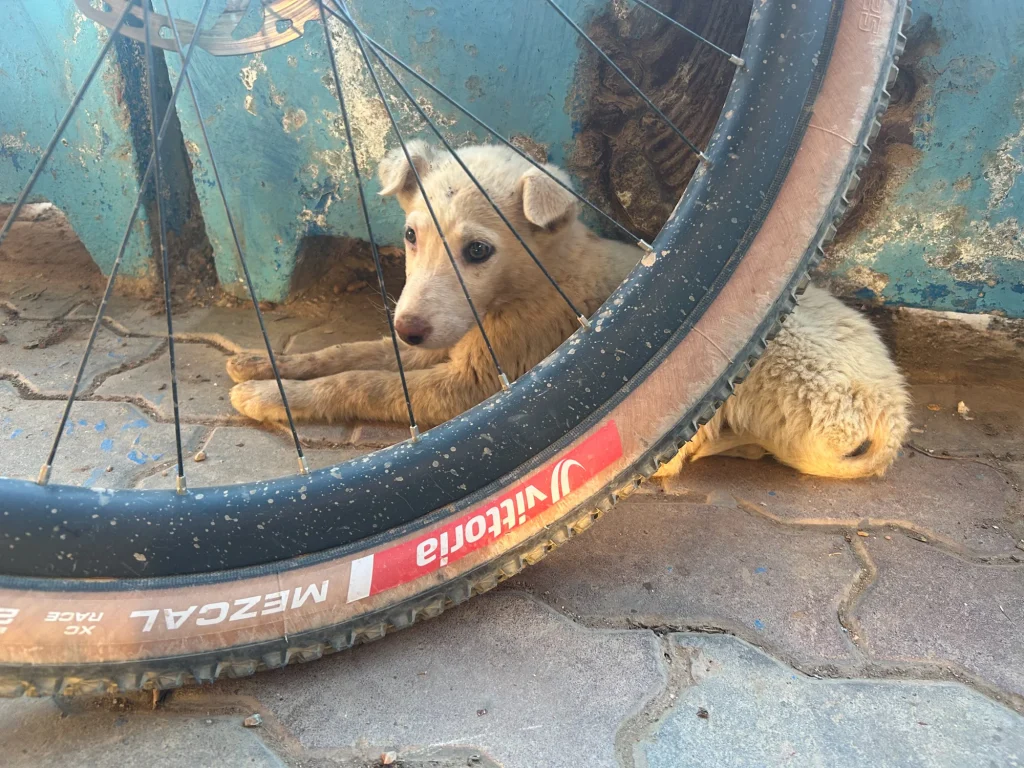
Outside, the village looked quite run-down. Broken, crumbling houses, rubbish everywhere, dogs in the dirt — and among them puppies you couldn’t help but feel sorry for.
When I stopped, the mother of three little dogs came up to me, as if to say: Got anything for me? Our hosts’ house was fine, the rooms clean, the bathrooms okay. That contrast, once again.
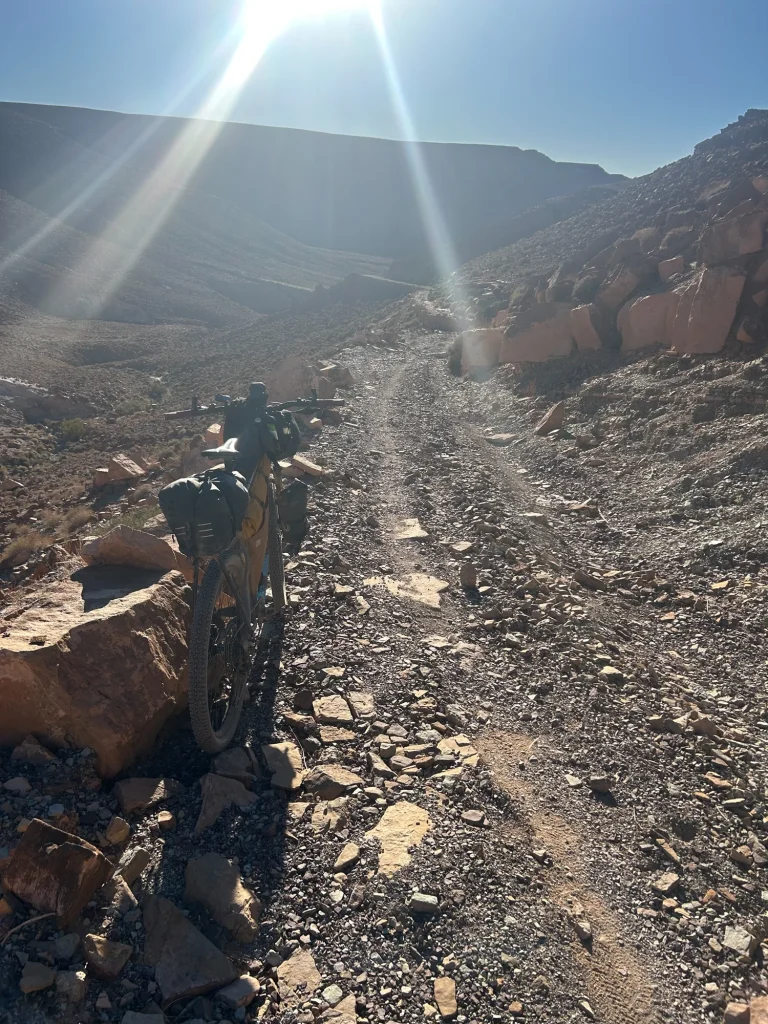
The section from Tagmout to Issafen — the Old Colonial Road — is the centrepiece of the AMR. An old track from the colonial era, built by hand into the Moroccan mountains. Nelson calls it his personal favourite.
It took us the whole day — from half past eight until 5 p.m. The Old Colonial Road is long, technically demanding, yet surprisingly rideable, and in two places the road had completely collapsed — you had to climb down three metres with your bike and back up on the other side.
Not recommended at night, but of course some did it anyway.
The Touring Crew
After the Colonial Road, I found myself in a motley group thrown together by chance. We rode together, ate together, bivouacked together. They were beautiful days.
Koen from Belgium, 63, probably the oldest participant, celebrated his birthday on the Colonial Road. Andrea from Milan, 46, rugby coach, smoked cigarettes in between and was best friends with every bartender within three minutes. Michela, also from Milan, bike messenger, faster downhill than all of us. Seun from England, 27, diabetic, very fit, regulated his blood sugar with a giant box of fake Haribo snakes. And me.
A colourful bunch that somehow found each other.
That’s what I love about this community: you meet people from all over the world, ride together for a few hours, share food and stories, and afterwards you have friends for life.
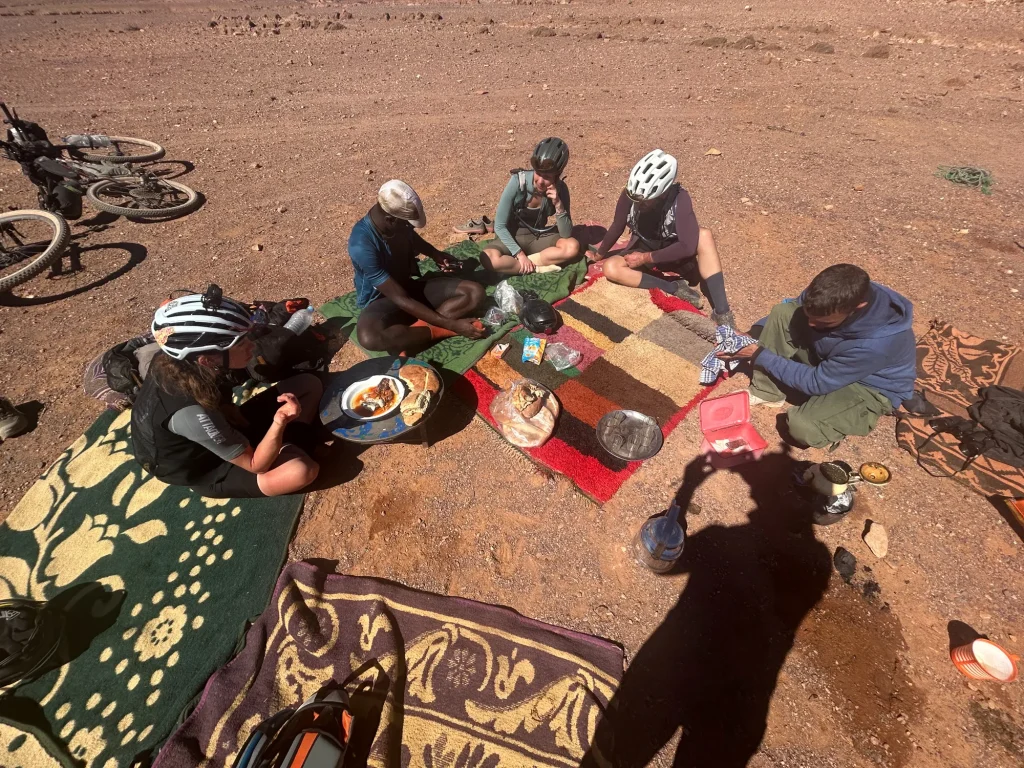
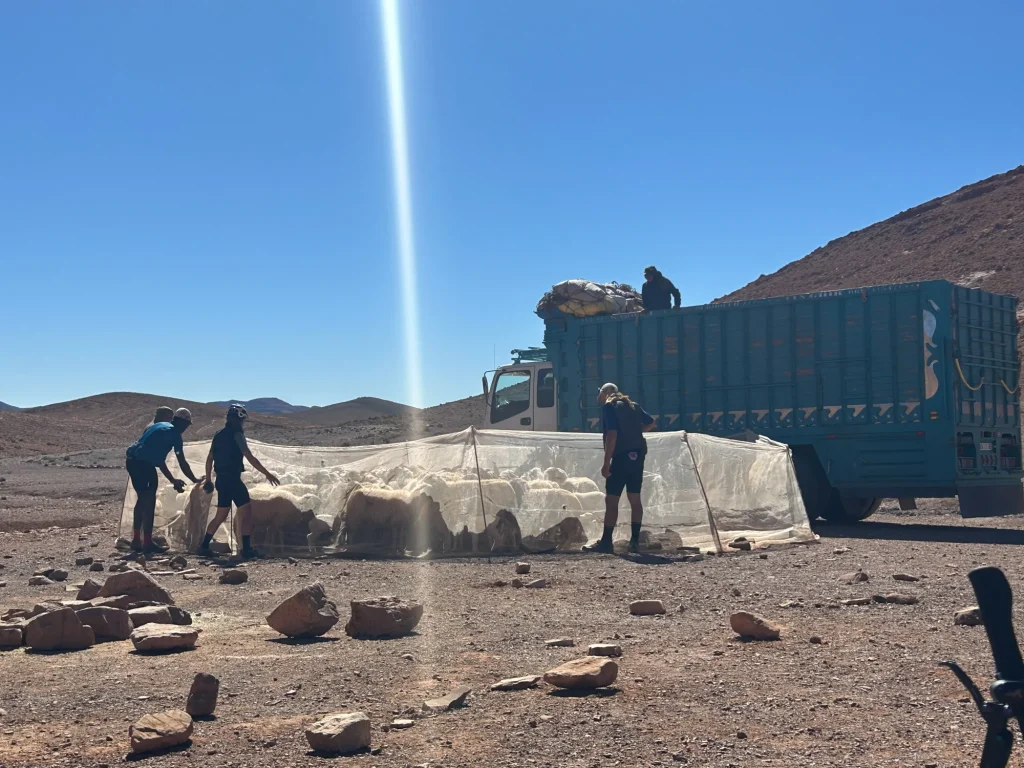
Outside of race mode, we had time for encounters we would have missed while racing. At 1,500 metres, we met shepherds who were loading their sheep onto a lorry. We shared sardines and bread, they made us tea. Moments like these only happen when you take your time.
The last two days were dominated by wind again. We pushed downhill because the headwind was too strong. It was tough and beautiful at the same time.
Upon arriving at CP3 at the hotel in Tafraout, there was finally some variety in the food: pizza, pasta, salad.
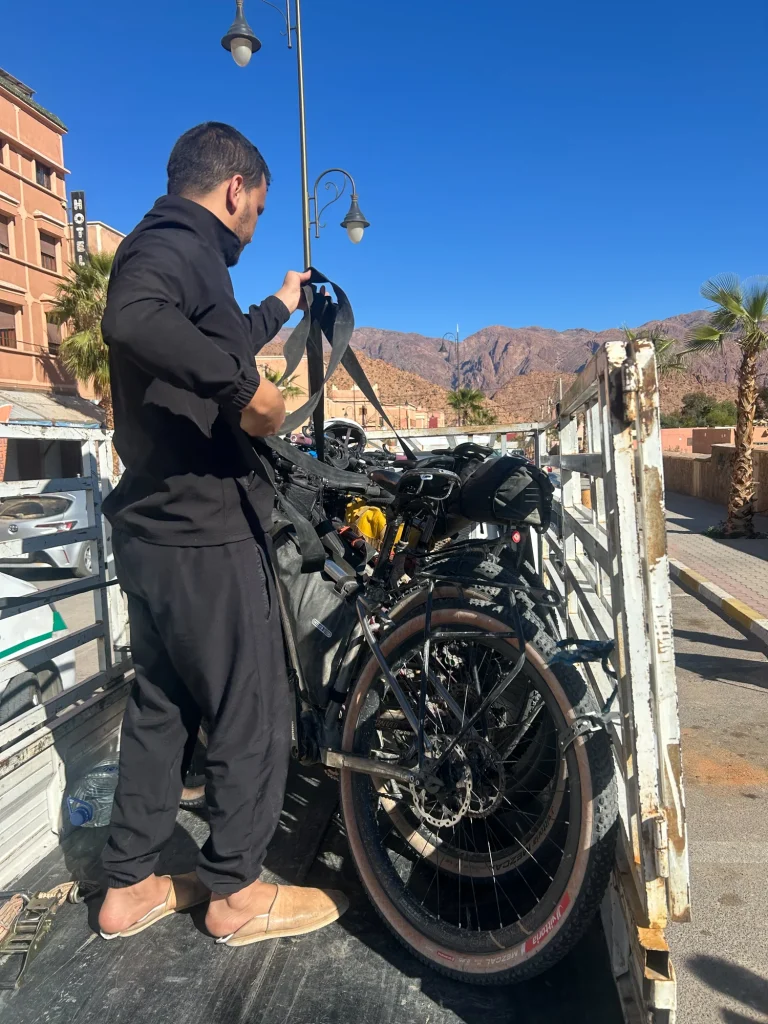
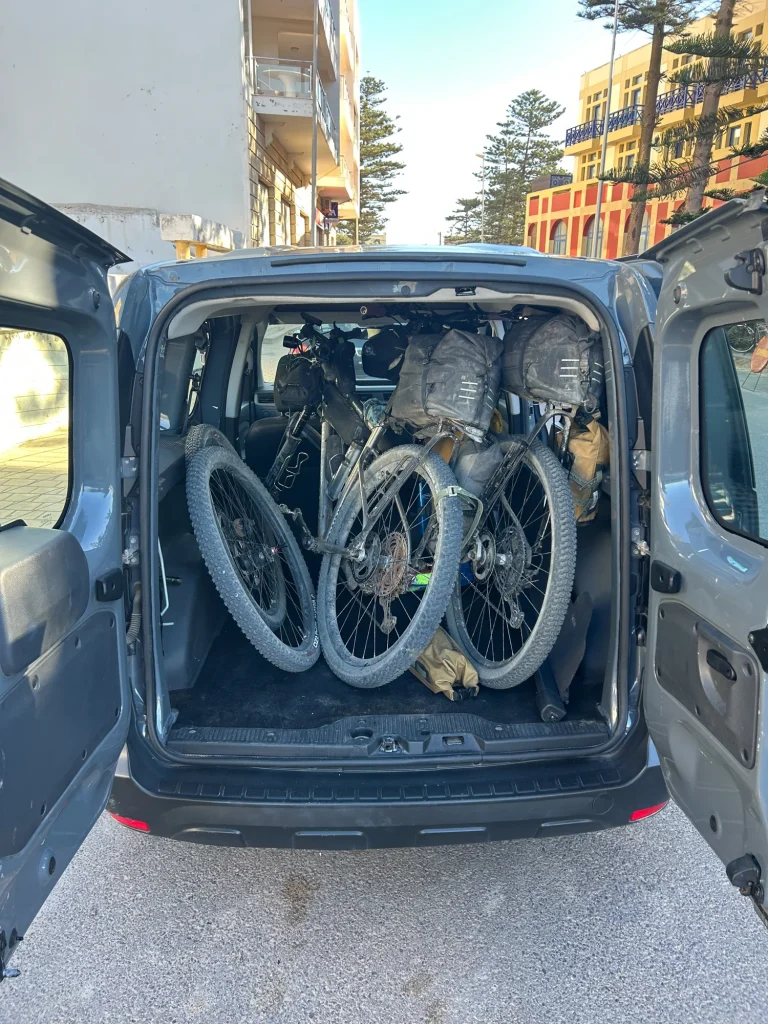
On the last morning, the Moroccan finale: we ordered a taxi for six people with six bicycles to Essaouira. It was supposed to leave at 10. It was closer to 12 — Moroccan time.
Then a taxi pulled up that would have been adequate for perhaps two people. In the end, it was a pickup for the bikes and a taxi for us.
The driver drove like a madman and was tapping away on his phone while driving. I sat in the front and hoped we would arrive in one piece.
What Remains
After seven days and roughly 1,000 kilometres, I called it at CP3. No official finish. And yet I’m proud.
Success and failure lie so close together in this sport. Small mistakes add up. I had brought too much gear, wanting to be prepared for all conditions given the weather forecast. But sometimes things simply don’t go to plan.
Physically, I felt good. But I never found a rhythm. I tried to force sleep, but it wouldn’t come. And in the end, the wind probably ground me down.
But what remains is so much greater than the result. Sunrises over the Atlas. Starry skies in the desert. The red mountains. The shepherds who invited us for tea in the mountains. Tagines and omelettes. The many children by the roadside. The crew I shared the last days with. The feeling of freedom and independence that comes with travelling by bicycle with minimal gear.
And Arnaud? In the final days, I worried about him. He was just ahead of the snail, it was tight, and nothing more could go wrong.
He made it. He finished within the time limit, just before the finisher party. I’m happy for him
AMR 2027? I don’t know. But Morocco won’t let go of me anytime soon.
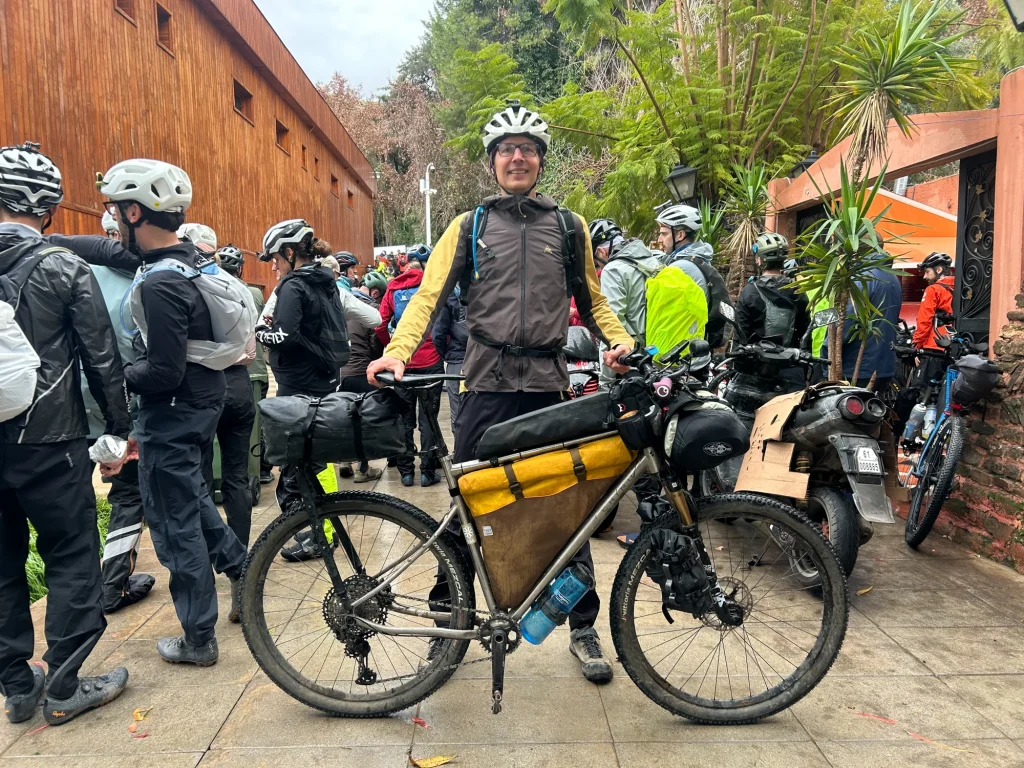
Equipment
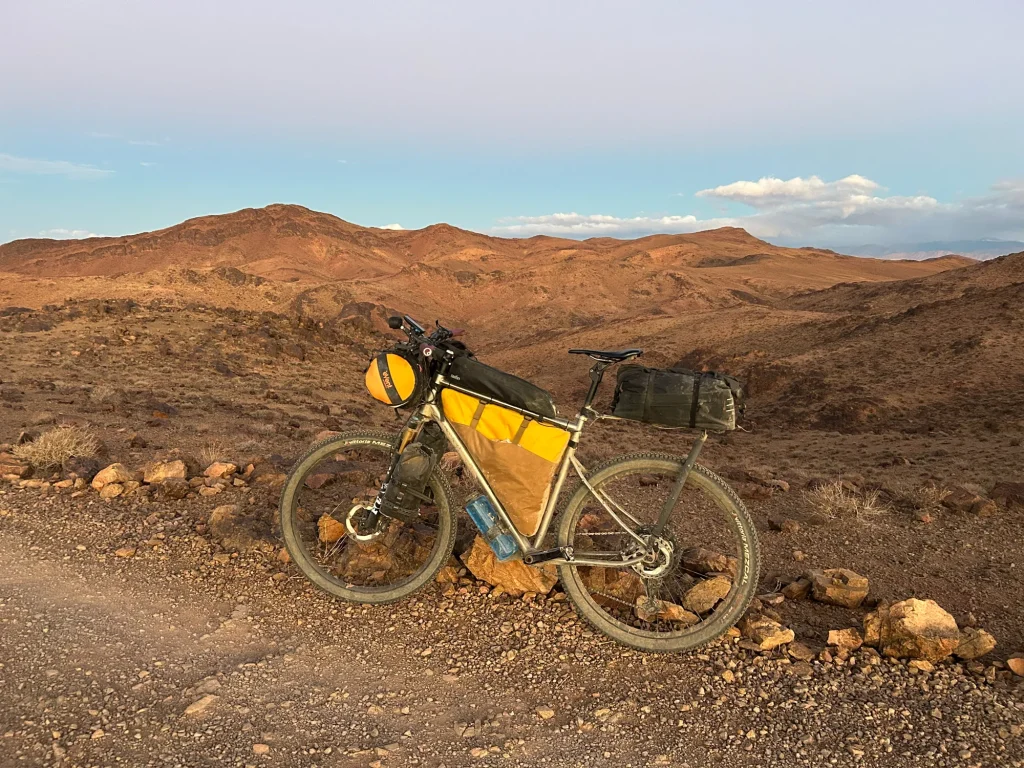
Chiru Kegeti Titanium
Fox 32 Factory suspension fork, 100 mm
Shimano XT mechanical 1×12 transmission with 32-tooth chainring
Mezcal 2.25″ tires mounted on DT Swiss aluminum rims
SON28 dynamo hub
SQLab carbon handlebars, SQLab saddle and inner bar ends
Ergon GA3 grips
Redshift Pro suspension seatpost
Bags
Witslingers custom full-frame bag
Tailfin Aeropack
Tailfin top tube long bag
Revelate Feed Bag
Revelate handlebar harness with Sea to Summit dry bag for sleeping gear